
Last Updated: April 2026 | Based on FEMA, NOAA, and USGS data
As spring brings warmer temperatures to Sonoma County, residents must recognize that wildfire season is an inevitable reality. Developing a proactive wildfire preparedness guide for Santa Rosa, CA is essential to ensuring your family’s safety before high-risk conditions peak. Taking action now, rather than waiting for an active emergency alert, significantly improves your home’s survivability and your evacuation efficiency.
Your county's real disaster history, what to do first, and what to keep at home. Free, and it shows up right here.
🔒 We never sell your email. Unsubscribe in one click.
📋 Print this checklist, keep it with your emergency supplies.
Before Wildfire Season. Santa Rosa Checklist
- ☐ Clear defensible space: Remove dead vegetation, dry leaves, and pine needles within 100 feet of your home.
- ☐ Harden your home: Ensure roof gutters are clean and install metal mesh screening over vents to prevent ember entry.
- ☐ Review insurance: Verify your homeowners’ policy covers wildfire damage and includes adequate replacement cost coverage.
- ☐ Map your routes: Identify at least two distinct evacuation routes out of your neighborhood, accounting for potential road closures.
- ☐ Sign up for alerts: Register for SoCoAlert, the official emergency notification system for Sonoma County.
- ☐ Document your assets: Take photos or video of your home interior and exterior for insurance documentation purposes.
- ☐ Establish a communication plan: Designate an out-of-area contact person to coordinate family check-ins during a crisis.
Emergency Kit Checklist
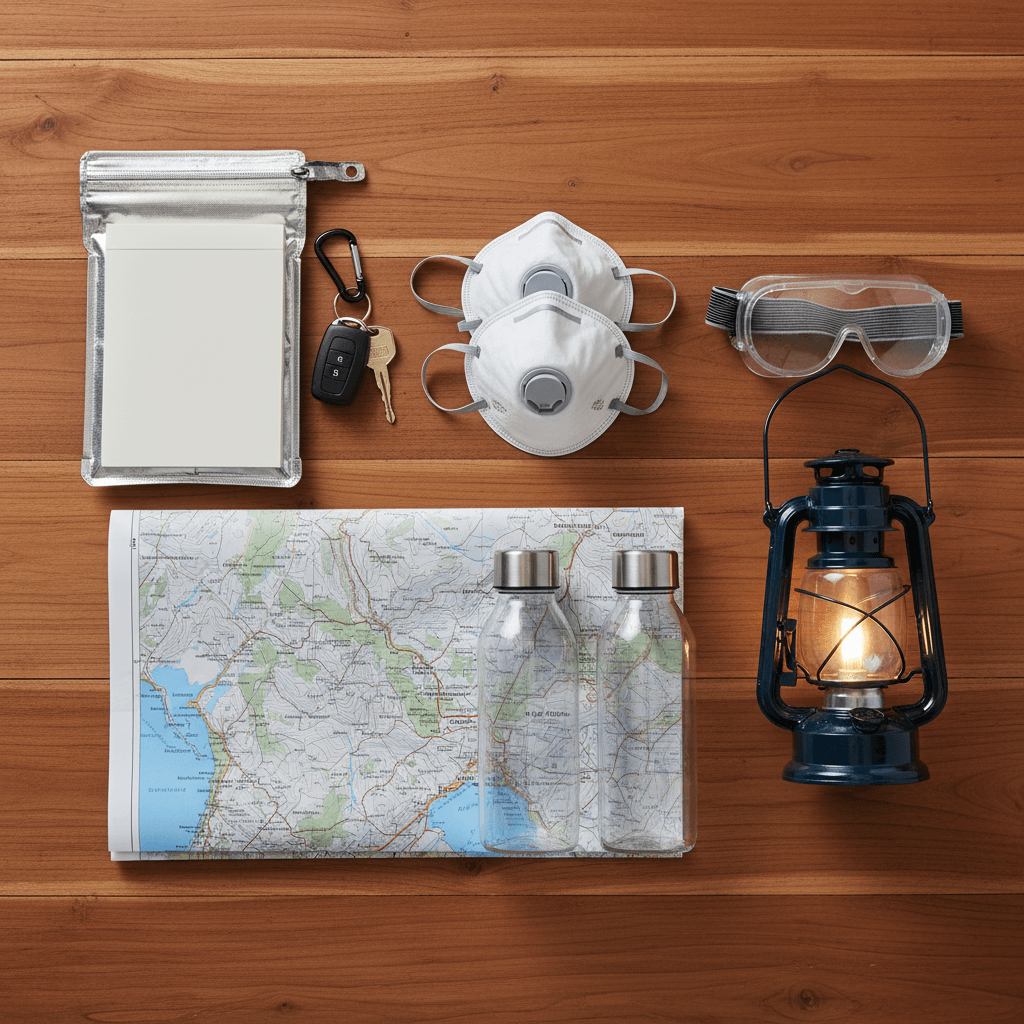
Your emergency kit should sustain your household for at least 72 hours. Keep these items in a portable, easy-to-grab container.
- Water (one gallon per person per day)
- Non-perishable food and a manual can opener
- Battery-powered or hand-crank radio (NOAA Weather Radio)
- Flashlight and extra batteries
- First aid kit, including specific personal prescription medications
- Whistle to signal for help
- Dust mask (N95) to filter contaminated air
- Moist towelettes and garbage bags for sanitation
- Wrench or pliers to turn off utilities
- Local maps and a portable cell phone charger
- Copies of important documents (insurance, ID, medical records) in a waterproof bag
- Cash in small denominations
📦 Recommended: Home Doctor
When medical facilities are overwhelmed or inaccessible during a wildfire, this guide provides essential protocols for treating smoke inhalation and burns at home. It is a vital resource for your emergency kit.
During Wildfire
- Monitor official sources: Follow updates from the Santa Rosa Fire Department and Cal Fire.
- Close all windows and doors: This prevents embers from entering and reduces airflow to the fire.
- Shut off HVAC systems: Turn off air conditioning and furnace units to stop smoke intake.
- Prepare for evacuation: Keep your vehicle parked facing the direction of exit with the fuel tank at least half full.
- Follow evacuation orders: If officials issue an evacuation order, do not delay. Leave immediately using your pre-planned routes.
After Wildfire: Recovery Steps
- Wait for the “All Clear”: Do not return to your property until local authorities confirm it is safe to enter.
- Document damage: Take photographs of all damage before beginning any cleaning or repairs for insurance claims.
- Check for hazards: Be alert for hot spots, smoldering debris, and structural instability in your home.
- Contact your insurance provider: Initiate the claims process as early as possible.
Frequently Asked Questions
How can I track wildfire alerts in Santa Rosa?
Residents should monitor the official National Weather Service website and register for Sonoma County’s emergency alert system, SoCoAlert. Always verify information through official government channels.
What is defensible space?
Defensible space is the buffer you create between a building on your property and the grass, trees, or any wildland area that surrounds it. This space is needed to slow or stop the spread of wildfire.
How do I prepare my home for embers?
Embers are the primary cause of home loss. Clean your gutters, replace combustible fencing attached to the house with non-combustible materials, and ensure all vents are covered with 1/8-inch metal mesh.
Should I stay if I have an underground shelter?
Evacuation is always the safest option. Only use specialized shelters if evacuation is physically impossible and you are trapped by fire.
What should I do if I cannot evacuate?
If trapped, call 911 immediately, stay inside the house, keep doors and windows closed, and move to a room away from the fire front until help arrives or the fire passes.
Get real disaster prep, decoded from FEMA, NOAA & USGS.
One short email when something actually matters for your zip code. No spam, ever.