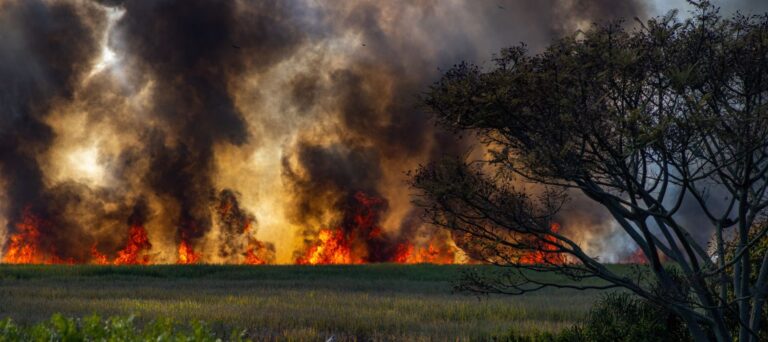

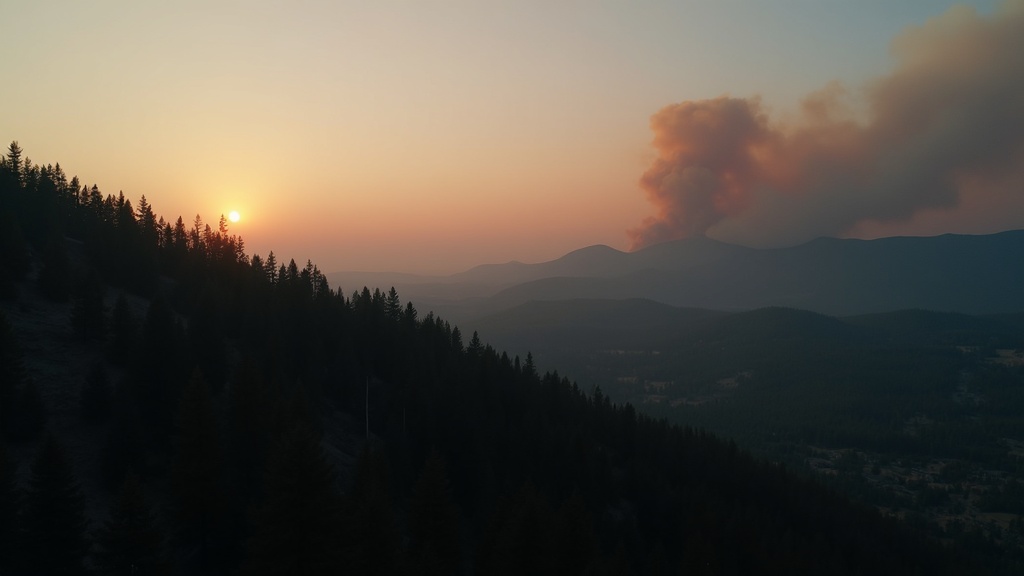
Since January 2016, California has received 151 federally declared disaster declarations, and 121 of them involved fire. That is not a typo. Fire accounts for roughly 80 percent of all major disaster declarations in the state over the last decade. Severe storms come in a distant second at 14. Everything else, floods, earthquakes, hurricanes, chemical releases, fills the remaining gap. Two fires were declared in May 2026 alone: the Bain Fire on May 20 and the Sandy Fire two days earlier. The January 2025 declarations covered the Eaton Fire, the Hurst Fire, and a straight-line wind event simultaneously. California does not have a wildfire season anymore. It has a wildfire baseline. Our Wildfire Preparedness guide covers that baseline in full.
Your county's real disaster history, what to do first, and what to keep at home. Free, and it shows up right here.
🔒 We never sell your email. Unsubscribe in one click.
This post is built around that reality. The FEMA data below is pulled from actual federal disaster records. The steps that follow are designed for California households specifically, not a generic checklist retrofitted to look local.
📊 CA Federally Declared Disasters (2016–2026)
151 major disaster declarations were issued for CA in this period, according to FEMA records.
| Disaster type | Declarations |
|---|---|
| Fire | 121 |
| Severe Storm | 14 |
| Flood | 6 |
| Hurricane | 2 |
| Earthquake | 2 |
| Biological | 2 |
| Chemical | 1 |
| Tropical Storm | 1 |
Most recent declarations
| Date | Type | Event |
|---|---|---|
| 2026-05-25 | Chemical | Chemical Release |
| 2026-05-20 | Fire | Bain Fire |
| 2026-05-18 | Fire | Sandy Fire |
| 2025-09-03 | Fire | 2-7 Fire |
| 2025-08-08 | Fire | Canyon Fire |
| 2025-01-08 | Fire | Wildfires And Straight-Line Winds |
Source: FEMA OpenFEMA Disaster Declarations · retrieved 2026-07-19 by US Risk Radar.
Why California fire disasters keep accelerating, and what FEMA data actually shows
The pattern in the FEMA records is not random. Fire declarations cluster in late summer and early fall, when offshore Diablo and Santa Ana winds combine with months of dried-out vegetation. But the January 2025 cluster, the Eaton Fire, Hurst Fire, and the Wildfires and Straight-Line Winds declaration all on a single date, is a signal that winter is no longer a reliable off-season. The 2-7 Fire declared in September 2025 and the Canyon Fire in August 2025 fit the historical window. The two May 2026 fires do not. The fire calendar is expanding.
FEMA’s federal declaration threshold is high. A fire has to overwhelm local and state response capacity before Washington issues a major disaster declaration. That means the 121 fire declarations on record represent the worst of the worst, not every wildfire California has fought, but every one that broke the state’s own ability to respond unaided. Understanding that context changes how you should think about personal preparedness. You are not planning for a manageable inconvenience. You are planning for events that regularly exceed government capacity.
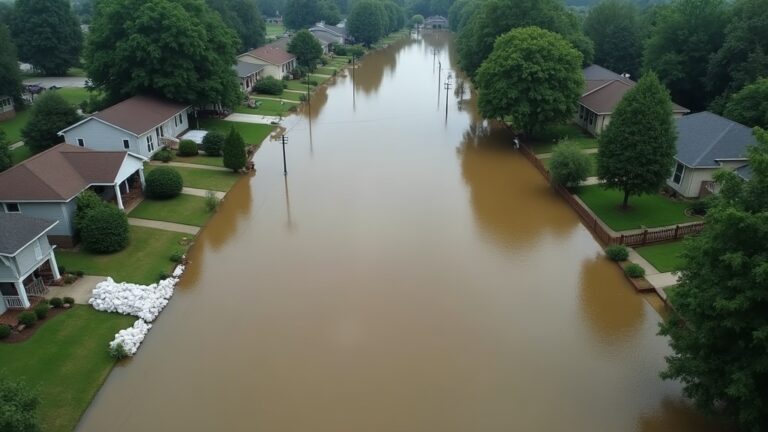
The non-fire entries in the record matter too. California has two earthquake declarations, two hurricane-related declarations, a dam/levee break, and a chemical release (the most recent disaster on record, declared May 25, 2026). A 72-hour kit that only addresses smoke is not complete.
The 15-minute departure standard: what it means to actually be ready
When the Eaton Fire moved through Altadena in January 2025, some residents had under 20 minutes between the first alert and the fire reaching their block. That is not unusual in California canyon terrain with offshore wind. FEMA’s preparedness guidance at fema.gov frames wildfire as a rapid-onset hazard, meaning preparation must happen before the event, not during it.
A real 15-minute departure means:
- Your go-bag is already packed and reachable without searching. If it lives in the back of a closet under seasonal gear, it does not count.
- Your car has at least a half tank of fuel. During red flag conditions, top it off. Gas stations near evacuation corridors run dry fast.
- Every adult in the household knows the two exit routes, not just the primary one. Canyon roads and single-egress neighborhoods are where people get trapped when the primary route is cut off or gridlocked.
- Pets have carriers or leashes staged near the door. Animals are the most common reason people delay or return early.
- Prescriptions are filled and accessible. A 3-day minimum is the floor; 7 days is better for anyone managing a chronic condition.
The alert levels in California follow a county-level warning system. An evacuation warning from your county OES means conditions may require you to leave, load vehicles, secure pets, and be ready to go in minutes. An evacuation order is mandatory: leave now, do not return to grab items. Weather.gov issues Red Flag Warnings when wind, low relative humidity, and fuel moisture combine to create extreme fire spread potential, treat a Red Flag Warning as an advance signal to pre-position your go-bag and fuel your car. Check weather.gov regularly during fire weather windows.
What goes in a California-specific 72-hour kit
Generic kit lists exist everywhere. This one is weighted toward what the FEMA record shows California households actually face: fire, smoke, heat, and the occasional secondary hazard (the May 2026 chemical release declaration is a reminder that evacuation kits need more than food and water).
- Water: 1 gallon per person per day minimum. California heat during fire season can push that to 1.5 gallons. Fill a case of bottled water and store it in the car during high-risk periods.
- Food: 3 days of shelf-stable calories that need no cooking and no refrigeration. Evacuation shelters often run short on food in the first 24–48 hours of a large event.
- N95 or KN95 masks: At least two per person. Wildfire smoke is a genuine respiratory hazard, not just an inconvenience. The California Air Resources Board and FEMA both recommend respirator-grade masks, not cloth.
- Medications: A full 3-day supply with written dosage instructions. If you take medications that require refrigeration, add a small soft cooler and ice packs to your kit.
- Documents: Keep a physical folder with photocopies of your driver’s license, insurance policies, property records, vaccination records for pets, and a home inventory. Store originals in a fireproof box; take the copies when you evacuate.
- Power and communication: A charged power bank (20,000 mAh minimum), a hand-crank or battery-powered NOAA weather radio, and a USB car charger. Cell towers can be overwhelmed or burned within hours of a fast-moving fire.
- Cash: Small bills. Card readers fail during power outages. $100–200 in mixed denominations is enough to cover fuel and food in most situations.
- Eye protection and chemical hazard awareness: Given the May 2026 chemical release declaration, consider adding safety glasses and knowing how to shelter-in-place (seal windows, turn off HVAC) as a secondary scenario in your plan.
- Clothing: Closed-toe shoes, long pants, long sleeves, and work gloves. Cotton and wool are safer near fire than synthetics, which can melt.
- Pet supplies: Carrier, leash, 3-day supply of food and water, vaccination records, and a recent photo of you with your pet in case you get separated.

📦 Recommended: The Lost Superfoods
Wildfire evacuations often cut off routine shopping and can keep families away from home longer than expected. A shelf-stable food plan helps you maintain calories, hydration, and morale when roads are congested and stores are closed.
Before you leave: the 10-minute property checklist
If your departure window allows it, and only if it does, a short pre-evacuation sweep can reduce damage and simplify your insurance claim afterward. Do not trade safety for any item on this list.
- Close all windows, doors, and pet doors. A closed house holds out embers longer than an open one.
- Move propane tanks, patio furniture, and doormats away from the structure or inside the garage.
- Shut off gas only if local fire authorities instruct you to or you have been trained to do it safely.
- Leave exterior lights on. Firefighters working in smoke at night use them to locate structures.
- Take 60 seconds to photograph each room with your phone and send the images to cloud storage or a contact outside the evacuation zone. That timestamp and visual record can matter significantly in an insurance dispute after a total loss.
After you leave, do not return until county officials confirm the area is safe. People who re-enter early risk encountering active fire, downed power lines, and compromised structures. They also create hazards for first responders still working the area.

📦 Recommended: Home Doctor
Wildfire smoke, minor burns, and eye irritation can become a problem when medical care is delayed or clinics are crowded. A practical home medical reference supports quick response while you wait for professional help.
Sign up for your county’s emergency alerts, right now, before you need them
California counties run their own emergency notification systems. Most use platforms like Nixle or AlertMedia and send wireless emergency alerts to cell phones in affected zones, but opting into your county’s direct notification system gives you faster, more specific information than a broad wireless alert. Search your county name plus “emergency alerts” or “OES alerts” and sign up before fire weather arrives. It takes about two minutes and requires only a zip code and phone number or email.
Also save these contacts in your phone now: your county Office of Emergency Services, the nearest Red Cross chapter, and a contact outside California who can serve as a family communication hub if local lines are congested.
Frequently asked questions
California has had fire disasters declared in both January and September. Is there really no safe window anymore?
The FEMA record confirms there is not. The January 2025 declarations, which covered the Eaton Fire, Hurst Fire, and a wind-fire event on the same date, broke the assumption that winter rains would suppress fire risk. Offshore wind events can produce critical fire conditions any month of the year in Southern California. Northern California’s fire window has historically run July through October, but it has also expanded. Preparedness in California now means year-round readiness, not seasonal.
The FEMA data shows two earthquake declarations since 2016. Should my wildfire kit also cover earthquakes?
Yes, and the overlap is larger than most people expect. Water, medications, documents, a power bank, cash, and sturdy footwear are essential for both hazards. The main additions for earthquake preparedness are a wrench to shut off gas (attached near the meter), a dust mask (different from a wildfire N95, but an N95 works for both), and a first-aid kit with splinting materials. Building one kit that addresses both events is more practical than maintaining two separate bags.
There was a chemical release declaration in May 2026, what does that mean for evacuation planning in California?
Chemical release events require a different initial response than fire: in many cases, the safest action is shelter-in-place rather than evacuation, at least until authorities identify the substance and direction of spread. Know the difference. If your county issues a shelter-in-place order for a chemical event, close all windows and doors, turn off your HVAC system, and seal gaps under doors with wet towels. Your NOAA weather radio and county alert system will specify whether to shelter or evacuate. Do not self-evacuate during a chemical event without official direction, driving through a contaminated plume can be more dangerous than staying put.
Get real disaster prep, decoded from FEMA, NOAA & USGS.
One short email when something actually matters for your zip code. No spam, ever.