
Last Updated: March 2025 | Based on FEMA/NOAA/USGS data
Since 2016, Virginia has received 15 federal disaster declarations, and if you’re mentally filing that under “coastal hurricane problem,” the breakdown will surprise you. Yes, four of those were hurricanes. But the list also includes three severe storms, two tropical storms, two biological events, and single declarations for a flood, a severe ice storm, a snowstorm, and a winter storm. The most recent? A severe winter storm declared in January 2026. Before that, severe storms and flooding in April 2025. And before that, Tropical Storm Helene hit twice in October 2024 within three days. Our Hurricane Preparedness guide covers the hurricane piece of that broader risk picture.
Your county's real disaster history, what to do first, and what to keep at home. Free, and it shows up right here.
🔒 We never sell your email. Unsubscribe in one click.
For Richmond residents, that pattern matters more than any single hurricane season forecast. The James River corridor is not a coastal flood zone, but it is a funnel for whatever moisture a dying tropical system pushes inland, and it freezes, surges, and overwhelms storm infrastructure in ways that catch people off guard every few years. This post is grounded in that actual record, not a generic preparedness checklist.
📊 VA Federally Declared Disasters (2016–2026)
15 major disaster declarations were issued for VA in this period, according to FEMA records.
| Disaster type | Declarations |
|---|---|
| Hurricane | 4 |
| Severe Storm | 3 |
| Tropical Storm | 2 |
| Biological | 2 |
| Winter Storm | 1 |
| Flood | 1 |
| Severe Ice Storm | 1 |
| Snowstorm | 1 |
Most recent declarations
| Date | Type | Event |
|---|---|---|
| 2026-01-23 | Winter Storm | Severe Winter Storm |
| 2025-04-04 | Severe Storm | Severe Winter Storms And Flooding |
| 2024-10-01 | Tropical Storm | Tropical Storm Helene |
| 2024-09-29 | Tropical Storm | Post-Tropical Cyclone Helene |
| 2022-09-30 | Severe Storm | Flooding And Mudslides |
| 2022-03-11 | Severe Storm | Severe Winter Storm And Snowstorm |
Source: FEMA OpenFEMA Disaster Declarations · retrieved 2026-07-19 by US Risk Radar.
Key Takeaways
- Virginia’s disaster record since 2016 spans eight distinct hazard types. Richmond residents need plans for more than just hurricanes.
- Tropical Storm Helene produced back-to-back federal declarations in September and October 2024, a reminder that remnant systems move fast and linger.
- The James River can rise dramatically from rainfall alone, without any storm surge involvement.
- Winter storms and flooding events have triggered more recent declarations than direct hurricane strikes.
- Flood insurance through the NFIP requires a 30-day waiting period, buy it before the season, not during a watch.
What Helene Actually Did to Virginia, and Why It Keeps Happening
Tropical Storm Helene earned two separate federal disaster declarations for Virginia within 72 hours in late September and early October 2024. That’s not a clerical quirk, it reflects how these systems behave once they cross the Appalachians. Helene’s remnants dumped catastrophic rainfall across the mid-Atlantic interior, causing river flooding and infrastructure damage well away from the coast. Richmond sits downstream of mountain watersheds that drain into the James; when those watersheds saturate quickly, the river responds fast.
The same dynamic produced the October 2021 declaration for flooding, landslides, and mudslides, and again the September 2022 declaration for flooding and mudslides. This is a pattern, not bad luck. The National Weather Service office in Wakefield, VA monitors this corridor closely, their flash flood guidance is worth bookmarking before any tropical system approaches the Southeast, not just when one is bearing down on Richmond directly.
Practically speaking: if a tropical system is making landfall anywhere between Georgia and the Carolinas, Richmond should be watching the James River gauge at weather.gov, not waiting for a local warning to be issued.
The Winter Storm Problem Nobody Talks About in June
The most recent FEMA declaration for Virginia, issued January 2026, was for a severe winter storm. The March 2022 declaration covered a severe winter storm and snowstorm. The May 2021 declaration (unusual timing for an ice event) covered severe winter storms. That’s three winter-related federal declarations in roughly four years.
Richmond’s position in central Virginia puts it in a notoriously tricky precipitation zone. Temperatures hover near freezing during many winter storms, which means the difference between rain, sleet, and ice accumulation can shift by a few degrees and a few miles. Power outages from ice loading on lines are longer and harder to restore than wind-damage outages, because utility crews can’t safely work until temperatures rise.
If your emergency kit was built around a three-day hurricane scenario, it may not be calibrated for a six-day ice storm with no heat. Account for that gap now: a propane camp stove rated for indoor use, extra blankets, and a way to charge devices without grid power are not hurricane supplies, they’re winter supplies that happen to share the same shelf.
Flood Insurance: The 30-Day Rule That Catches People Every Season
Standard homeowners insurance does not cover flood damage. This is not fine print, it is the single most common source of financial devastation after inland flooding events. The National Flood Insurance Program (NFIP), administered through FEMA, offers policies that do cover it, but they require a 30-day waiting period before taking effect.
That means you cannot buy flood coverage when a storm watch is posted. You need to already have it. Given that Virginia saw flood-producing events in 2021, 2022, and 2024, the risk frequency for Richmond-area homeowners, particularly those near the James River floodplain or low-lying tributaries, is high enough to justify the annual premium for most households. Check your current policy, call your insurer, and ask specifically about flood exclusions.
If you rent, renter’s insurance also excludes flood damage to your belongings by default. A separate contents policy through the NFIP exists for renters and is often inexpensive.
Building a Kit That Matches Richmond’s Actual Threat Mix
The standard FEMA three-day kit recommendation is a floor, not a ceiling. Given Virginia’s record of multi-day power outages from ice storms and the possibility of being unable to leave flooded roads for longer periods, a seven-day supply is more realistic for Richmond households.
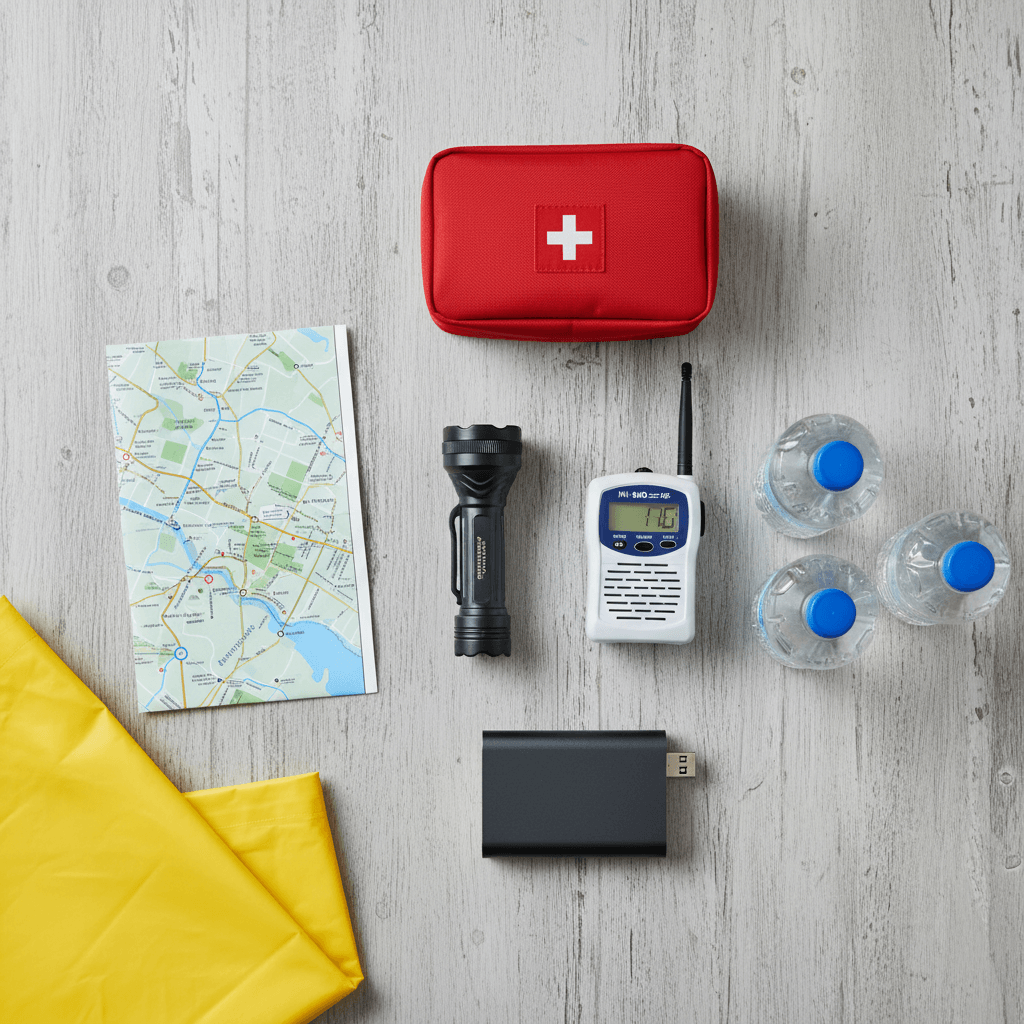
Core supplies to have on hand:
- Water: one gallon per person per day, minimum seven-day supply; fill the bathtub with a WaterBOB bladder when a storm approaches
- Non-perishable food for seven days, prioritize items that don’t require cooking if you lose your stove
- Battery-powered or hand-crank NOAA weather radio (cell networks degrade quickly in major events)
- Flashlights, headlamps, and enough batteries to last a week
- Portable phone charger (10,000–20,000 mAh minimum)
- First aid kit with a manual, not just bandages
- Propane or butane camp stove with fuel canisters (for winter outage scenarios, only use in ventilated areas)
- Warm blankets or a sleeping bag rated below freezing, per person
- Wrench to shut off the gas meter if flooding threatens your line
- Paper copies of insurance documents, IDs, and emergency contacts stored in a waterproof bag
- Cash in small bills. ATMs and card readers go offline during outages
- Local road maps; GPS apps require signal
📦 Recommended: Home Doctor
When emergency services are stretched thin or unreachable, this practical medical guide shows you how to handle injuries and illness at home, an essential reference for any disaster plan.
Before the Season: Three Things to Do Now
Check your flood zone status. Use FEMA’s Flood Map Service Center at msc.fema.gov to look up your address. If you’re in or near a Special Flood Hazard Area (SFHA), your mortgage lender may actually require flood insurance, and if they haven’t enforced it, you’re exposed.
Establish a family communication plan with an out-of-state contact. During regional emergencies, local calls often fail while calls to out-of-state numbers succeed. Designate one person outside Virginia as the household’s information hub. Text messages also get through when voice calls won’t.
Know which roads flood first near your home. Richmond has documented problem corridors, stretches along the James River bottom, low underpasses, and areas near Shockoe Creek. If you’ve driven those routes in heavy rain and noticed pooling, they will be impassable in a flooding event. Identify your alternate routes now, not during the event.
Local Contacts Worth Saving Before You Need Them
- City of Richmond Office of Emergency Management
- Virginia Department of Emergency Management (VDEM)
- NWS Wakefield, VA, your local forecast office
Frequently Asked Questions
Virginia has four hurricane declarations since 2016, does Richmond need to worry about direct hurricane-force winds?
Rarely, but not never. More commonly, Richmond experiences tropical-storm-force winds (39–73 mph) from weakening systems, which is still enough to down trees, knock out power for days, and turn road debris into a hazard. The bigger and more consistent threat is rainfall-driven flooding along the James River watershed, that’s what produced the back-to-back Helene declarations in 2024 and the flooding and mudslide declarations in 2021 and 2022.
If Virginia has had multiple winter storm declarations recently, why focus on hurricane prep?
You shouldn’t focus only on hurricane prep, that’s the point. Virginia’s 15 declarations since 2016 span eight different hazard types. A resilient household kit covers power outages, flooding, and road closures regardless of what caused them. The supplies overlap significantly; the main winter-specific additions are heat retention (blankets, warm layers) and a safe alternative cooking source.
When exactly should a Richmond resident start paying attention to a tropical storm forming in the Gulf or Atlantic?
As soon as the National Weather Service issues a tropical watch or warning for any portion of the Southeast coast, even if the track looks like it will make landfall far from Virginia. Helene is the clearest recent example: it hit the Florida Gulf Coast, traveled inland, and still produced enough rainfall to earn two federal disaster declarations in Virginia. Track alone doesn’t determine impact for inland flooding events. Monitor the NWS Wakefield office and VDEM’s social channels from that point forward.
Get real disaster prep, decoded from FEMA, NOAA & USGS.
One short email when something actually matters for your zip code. No spam, ever.