
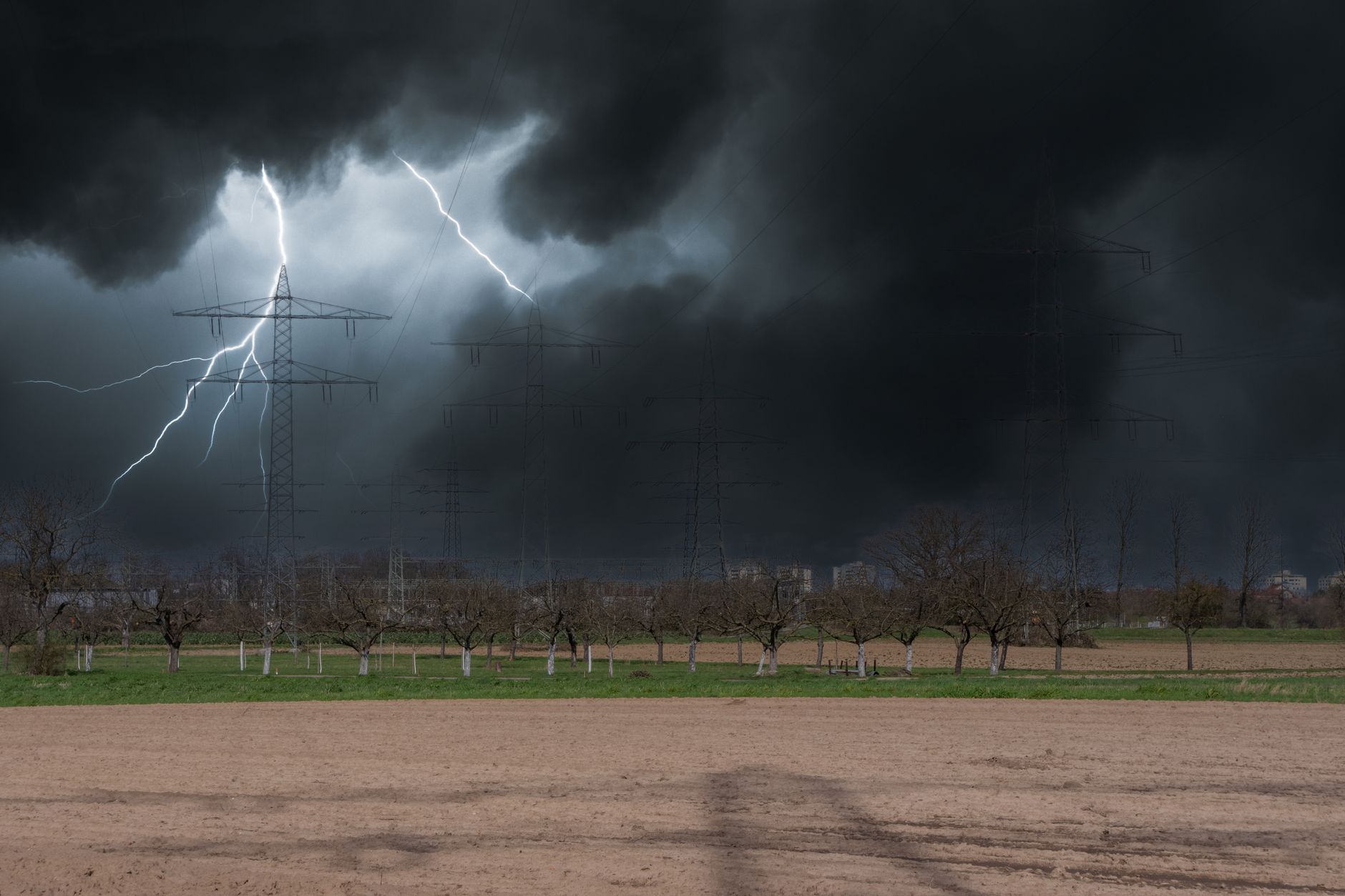
Since January 1, 2021, FEMA has recorded 351 federally declared disasters across the United States. Not weather events. Not close calls. Official declarations, the kind that unlock federal recovery money because the damage exceeded what states could handle alone. Of those 351, 140 were caused by severe storms. That’s 40 percent of every major federal disaster in four years traced back to the same thing: wind, lightning, hail, and the localized power failures they leave behind. Floods added another 78. Hurricanes, which dominate the public conversation about grid risk, account for just 31. The threat most likely to darken your house this summer isn’t a named storm. It’s a Tuesday afternoon thunderstorm that drops a tree on a feeder line three blocks away. See our Power Outage Preparedness guide for how to plan around that kind of ordinary, unpredictable outage.
Your county's real disaster history, what to do first, and what to keep at home. Free, and it shows up right here.
🔒 We never sell your email. Unsubscribe in one click.
That’s not a reason to panic. It’s a reason to plan specifically, for the disaster type that actually shows up most often, in the regions where it hits hardest.
📊 Across the United States: Federally Declared Disasters (2021–2026)
351 major disaster declarations were issued in this period, according to FEMA records.
| Disaster type | Declarations |
|---|---|
| Severe Storm | 140 |
| Flood | 78 |
| Hurricane | 31 |
| Winter Storm | 22 |
| Fire | 20 |
| Tropical Storm | 17 |
| Severe Ice Storm | 9 |
| Tornado | 9 |
States with the most declarations
| State | Declarations |
|---|---|
| AK | 18 |
| TN | 16 |
| CA | 16 |
| KY | 14 |
| MT | 13 |
| MO | 12 |
| KS | 12 |
| NE | 11 |
Most recent declarations
| Date | Type | Event |
|---|---|---|
| 2026-06-30 | Flood | Severe Storms, Tornadoes, And Flooding (Wi) |
| 2026-06-30 | Flood | Severe Storms, Tornadoes, And Flooding (Mi) |
| 2026-06-30 | Severe Storm | Severe Storms, Straight-Line Winds, Tornadoes, And Flooding (Ms) |
| 2026-06-30 | Severe Storm | Severe Storms, Straight-Line Winds, Flooding, Landslides, And Mudslides (Id) |
| 2026-06-30 | Typhoon | Super Typhoon Sinlaku (Gu) |
| 2026-06-30 | Tropical Storm | Tropical Storm Arthur (La) |
Source: FEMA OpenFEMA Disaster Declarations · retrieved 2026-07-20 by US Risk Radar.
Severe storms are the real outage engine, and they don’t announce themselves like hurricanes do
A hurricane gives you days of warning. A severe thunderstorm can spin up in under two hours. That asymmetry matters enormously for household readiness. When FEMA’s own declaration data shows severe storms at 140 events since 2021, more than floods and hurricanes combined, it’s telling you something about where preparedness investment actually pays off.
The states with the highest declaration counts since 2021 confirm this: Alaska (18), Tennessee (16), California (16), Kentucky (14), Montana (13), Missouri (12), Kansas (12), and Nebraska (11). That’s not a coastal hurricane corridor. It’s a cross-section of the country where convective storms, flooding, and compounding weather events are the norm. As recently as June 30, 2026, FEMA logged simultaneous declarations for severe storms and flooding in Wisconsin, Michigan, Mississippi, and Idaho, plus a tropical storm hitting Louisiana and wildfires in Nebraska, all on the same calendar date.
That kind of stacking is exactly what strains local utility crews and stretches restoration timelines from hours into days.
Why “the grid looks fine nationally” doesn’t protect your block
Grid operators publish seasonal outlooks, and summer 2026 forecasts have been described in cautiously optimistic terms. That framing refers to the bulk transmission system, major generation plants, high-voltage lines, regional balance. It says almost nothing about what happens at the distribution level, which is where most residential outages actually occur.
Your neighborhood runs on a feeder circuit connected to a local substation. A single lightning strike, a car hitting a pole, a transformer overloaded by three days of 95-degree heat, or a tree limb that’s been rubbing a line since March, any of those can take your block dark while the regional grid reads green. FEMA’s guidance at fema.gov is built around exactly this reality: households should plan to be self-sufficient for at least 72 hours because restoration is unpredictable at the local level even when the broader system is intact.
Summer adds its own layer. Heat advisories and excessive heat warnings from weather.gov signal not just discomfort but a genuine indoor hazard. When the air conditioning stops and the outdoor temperature is 98°F, a power outage transitions from inconvenient to dangerous in a matter of hours, especially for older adults, young children, and anyone with a medical condition.
The three hours before the storm hit: what most households skip
Most outage preparation advice focuses on what to do after the lights go out. The higher-value window is the two to three hours before a storm arrives, when you can still act on information instead of reacting to darkness.
When weather.gov issues a Severe Thunderstorm Watch for your county, treat it as a soft start signal:
- Plug in every device that takes a charge, phones, tablets, power banks, hearing aids, CPAP batteries.
- Fill a large pot or two with tap water. If flooding or a boil-water notice follows the storm, you’ll have a reserve.
- Move refrigerated medications into a cooler with ice packs. Don’t wait to see if the power actually goes out.
- Close blinds on south- and west-facing windows. This one step slows indoor heat gain significantly if you lose AC mid-afternoon.
- Confirm that every adult in the house knows where the flashlights are. Not generally, specifically.
That’s a 15-minute routine. It doesn’t require a generator or a full emergency kit. It just requires doing it before the Watch becomes a Warning.
72 hours without power in summer heat: the actual sequence of problems
Hours 0–4 are usually manageable. The house is still cool from AC, phones are charged, and food is safe. The problems compound on a timeline most households don’t mentally model in advance.
Hour 4–8: Indoor temperatures start climbing, especially in upper floors or poorly insulated homes. Refrigerator contents are still safe if the door stays closed, but the window is narrowing. This is when battery fans and identifying the coolest room in the house become practical decisions, not theoretical ones.
Hour 8–24: Phone batteries are the new scarce resource. Anyone relying on a single device with no backup charging is now making tradeoffs between navigation, communication, and monitoring the utility outage map. Frozen items in a full freezer remain safe for roughly 24–48 hours; a refrigerator that’s been opened repeatedly may already be approaching unsafe temperatures for meat and dairy.
Hour 24–72: This is where preparation separates households that are stressed from households that are coping. The differentiating factors are almost always the same: backup power for communication, a realistic cooling plan (including knowing where the nearest public cooling center is), and shelf-stable food that doesn’t require refrigeration or cooking.
For households that want a structured framework covering all three phases, Blackout Protocol is designed to walk through exactly this sequence, before an emergency starts, not during it.
📦 Recommended: Blackout Protocol
A summer outage can start with a single local fault and quickly become a long evening without refrigeration, cooling, or reliable charging. This guide helps turn a vague plan into a practical home system.
When the power comes back: the surge problem most households ignore
Restoration isn’t the end of the risk, it’s a different phase of it. When utility crews restore a circuit after a storm event, voltage can fluctuate before it stabilizes. Routers, desktop computers, smart TVs, and other electronics connected at the moment of restoration are exposed to those fluctuations. It’s a secondary problem that the 140-severe-storm declaration count makes statistically common, not exotic.
Unplugging sensitive electronics before a storm, or at minimum, using quality surge protectors, is the low-cost version of this protection. For households that want more comprehensive coverage of power quality issues, The Grid Phantom addresses the electronics protection side of outage planning specifically.
📦 Recommended: The Grid Phantom
Even a short outage can be followed by a surge when service returns. This is a practical option for households that want to better protect electronics and reduce damage from unstable power conditions.
The short kit that actually covers 72 summer hours
Skip the 50-item master list. These are the items that solve the four most common failure points, communication, lighting, food safety, and heat, in a realistic summer outage scenario:
- 2–3 fully charged power banks (10,000 mAh or larger for extended outages)
- One solar charger panel, genuinely useful when an outage stretches past 24 hours
- 2–3 LED lanterns with spare batteries, not candles; fire risk climbs sharply when people are navigating dark spaces
- Battery or hand-crank weather radio, receives NOAA Weather Radio All Hazards alerts without a phone signal
- Hard cooler with reusable ice packs, for medications that require refrigeration, not just food
- Three days of shelf-stable food and one gallon of water per person per day per fema.gov guidance
- Manual can opener, this gets forgotten until it’s needed
- Written list of contacts and utility outage reporting numbers, saved somewhere that doesn’t require a charged phone screen
FAQ: summer outages and what FEMA’s disaster record actually tells us
Why does FEMA declare so many disasters for severe storms when they seem less dramatic than hurricanes?
Federal disaster declarations trigger when damage costs exceed what state and local governments can manage without assistance. Severe storms cause widespread, dispersed damage, downed lines, flooded roads, structural damage across many counties simultaneously, that adds up quickly even without a single catastrophic impact point. With 140 severe storm declarations since 2021, they represent the single most federally recognized disaster type in the country.
If my state isn’t in the top eight, does that mean my outage risk is lower?
Not necessarily. The top-state counts reflect the frequency of declarations large enough to require federal involvement. States like Tennessee, Missouri, and Kansas have high counts partly because of geography, they sit in corridors where severe convective weather is frequent and widespread. But distribution-level outages from localized storms happen in every state. Your county’s specific risk is better assessed through your local utility’s historical outage data and weather.gov’s climate normals for your region.
How long should I realistically plan for a summer power outage to last?
FEMA’s 72-hour standard exists because some outages last that long or longer, particularly after widespread storm events when utility crews are spread across many simultaneous repairs. The June 30, 2026 declarations across Wisconsin, Michigan, Mississippi, and Idaho on the same day illustrate exactly that scenario, multiple states competing for restoration resources at once. Plan for 72 hours as a minimum baseline, not a worst case.
Get real disaster prep, decoded from FEMA, NOAA & USGS.
One short email when something actually matters for your zip code. No spam, ever.