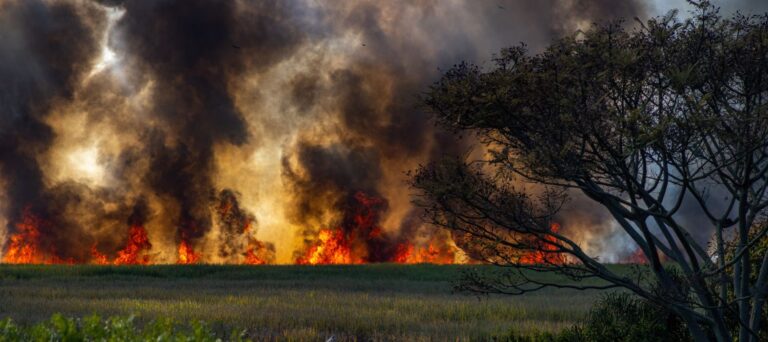

A properly fitted wildfire smoke N95 respirator blocks at least 95 percent of airborne particles, including the fine PM2.5 released by burning vegetation and structures, according to CDC/NIOSH guidance (2023). Pairing an N95 with a HEPA air purifier rated for your room size is the most effective two-layer defense for households in wildfire-prone regions.
Your county's real disaster history, what to do first, and what to keep at home. Free, and it shows up right here.
🔒 We never sell your email. Unsubscribe in one click.
Why Wildfire Smoke Is Different from Ordinary Air Pollution
Wildfire smoke is a mixture of gases and fine particles produced when vegetation, structures, and vehicles burn. The most dangerous component is PM2.5, particles smaller than 2.5 micrometers in diameter. According to EPA (2023), PM2.5 penetrates deep into the lungs and can enter the bloodstream, worsening asthma, heart disease, and lung conditions. A standard dust mask or surgical mask does not filter PM2.5 to a protective level. Only an N95 or higher-rated respirator, properly fitted, reduces inhalation of those particles by 95 percent or more.
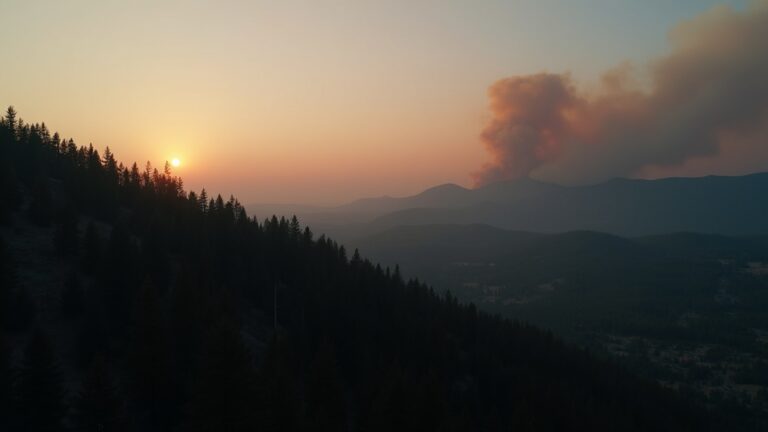
Smoke can also travel hundreds of miles from the fire perimeter. During large Western fire seasons, AirNow (2022) has recorded hazardous Air Quality Index values in states with no active fires nearby. That means even households far from a visible fire need both outdoor protection (an N95) and indoor protection (a HEPA air purifier).
N95 vs. Other Mask Types: A Direct Comparison
| Mask Type | Filtration Level | Protects Against PM2.5 | NIOSH Approved | Fit Test Required for Full Protection |
|---|---|---|---|---|
| Cloth or fabric mask | 10 to 30 percent (varies) | No | No | No |
| Surgical / procedure mask | About 60 to 80 percent | Partial, not reliable | No | No |
| N95 respirator | At least 95 percent | Yes | Yes | Yes, snug seal required |
| KN95 (Chinese standard) | At least 95 percent (design spec) | Yes, if genuine | No (FDA EUA only) | Yes, snug seal required |
| P100 half-face respirator | At least 99.97 percent | Yes | Yes | Yes, formal fit test strongly advised |
Source: CDC/NIOSH Respirator Selection Logic (2023).
How to Wear a Wildfire Smoke N95 So It Actually Works
An N95 respirator sitting loose on your face provides almost no protection. The seal between the mask and your skin is where filtration happens. Follow these steps every time you put one on.
- Wash or sanitize your hands before handling the respirator.
- Inspect the respirator for tears, broken straps, or a crushed nose bridge before use.
- Place the mask over your nose and mouth, position the top strap above your ears, and the bottom strap below your ears.
- Press the metal nose bridge firmly against the bridge of your nose with both index fingers.
- Perform a user seal check: cup both hands over the respirator and exhale sharply. If you feel air escaping at the edges, readjust and repeat.
- Do not wear an N95 over a beard or stubble. Facial hair breaks the seal and defeats filtration.
- Replace the respirator when breathing becomes difficult, when it is visibly soiled, or after each shift outdoors in heavy smoke conditions.
The CDC User Seal Check guide (2023) provides illustrated instructions for both positive and negative pressure checks.
Indoor Protection: Choosing a HEPA Air Purifier for Smoke
When smoke infiltrates your home, an air purifier with a true HEPA filter removes PM2.5 particles from indoor air. The key metric is the Clean Air Delivery Rate, or CADR, measured in cubic feet per minute. The EPA (2022) recommends choosing a purifier with a smoke CADR at least two-thirds of your room’s square footage. For a 300-square-foot room, look for a smoke CADR of at least 200.
| Room Size (sq ft) | Minimum Smoke CADR (cfm) | Recommended Filter Type | Filter Replacement Interval |
|---|---|---|---|
| Under 150 | 100 | True HEPA | Every 6 to 12 months |
| 150 to 300 | 100 to 200 | True HEPA plus activated carbon | Every 6 to 12 months |
| 300 to 500 | 200 to 333 | True HEPA plus activated carbon | Every 6 months under heavy smoke |
| Over 500 | 333 or higher | True HEPA plus activated carbon, or whole-home HEPA | Every 6 months or per manufacturer |
Activated carbon layers in the filter also reduce smoke odors and some gaseous pollutants. During heavy smoke events, close windows and doors and run the purifier on its highest setting. The EPA notes that keeping one room sealed and purified, a concept called a clean room, is especially important for children, elderly residents, and people with respiratory or cardiac conditions. See EPA Clean Room guidance (2022).
How Long Do N95 Respirators and HEPA Filters Last?
| Item | Shelf Life (unopened) | Use Life (in smoky conditions) | When to Replace |
|---|---|---|---|
| N95 respirator (NIOSH approved) | Up to 5 years per NIOSH (2020 study) | One shift or when breathing resistance increases | Visibly soiled, wet, or damaged |
| HEPA air purifier filter | Varies by product | 6 to 12 months under normal use | Per manufacturer, or when CADR drops noticeably |
| HVAC filter (MERV 13 or higher) | Varies | 1 to 3 months during smoke season | Visibly gray or when airflow is restricted |
NIOSH published shelf-life findings for N95 respirators in a 2020 storage fact sheet. Store sealed N95 packs away from heat, humidity, and UV light to preserve filtration integrity through the rated shelf life.
Who Is Most at Risk from Wildfire Smoke
The EPA (2023) identifies the following groups as most vulnerable to smoke-related health effects.
- Children under 18, because their lungs are still developing and they breathe more air per pound of body weight.
- Adults over 65, because cardiovascular and respiratory capacity often declines with age.
- Pregnant individuals, because PM2.5 exposure is linked to adverse birth outcomes.
- People with asthma, COPD, or other chronic lung conditions.
- People with heart disease or diabetes.
These groups should begin indoor air quality measures earlier and at lower AQI thresholds than the general population. The AirNow AQI scale (2024) recommends that sensitive groups limit prolonged outdoor exertion when the AQI for PM2.5 exceeds 100.
Step-by-Step: Setting Up a Smoke Defense Plan Before Fire Season
- Check your local area’s historical wildfire smoke risk using the AirNow interactive map (2024) to understand which months typically bring elevated AQI.
- Stock enough N95 respirators for every household member for at least two weeks of intermittent outdoor activity during smoke events. A 10-pack covers one person for roughly 10 outdoor outings.
- Purchase and install a HEPA air purifier sized for your main living area or bedroom before smoke season begins.
- Replace your HVAC filter with a MERV 13 or higher-rated option and set the system to recirculate rather than draw in outside air during smoke events. See EPA HVAC guidance (2022).
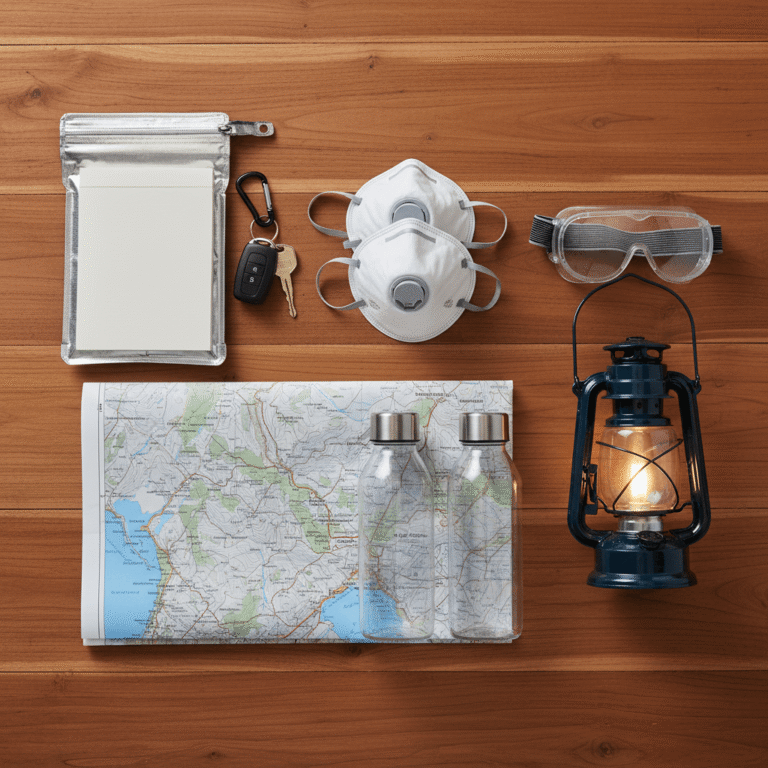
- Create a designated clean room: one room with the purifier running, windows sealed with tape or weatherstripping if needed, and a wet towel at the door base if smoke is heavy.
- Enable Wireless Emergency Alerts on every household phone and bookmark your local NOAA/NWS forecast office page (2024) to monitor air quality and red flag warnings.
- Identify and pre-position supplies for at-risk family members, including extra inhalers, medications, and a battery-powered fan for the clean room if power is interrupted.
What to Buy First
For outdoor protection during wildfire smoke events, start with the 3M 8511 N95 Respirator Masks (10-Pack), a NIOSH-approved respirator with an exhalation valve that reduces heat and moisture buildup during extended wear. For indoor air quality, the LEVOIT Core 300 Air Purifier uses a three-stage true HEPA filtration system rated for rooms up to 219 square feet and is well suited as a bedroom or clean-room unit during smoke events.
Affiliate disclosure: This article contains affiliate links. We may earn a commission from qualifying purchases, at no additional cost to you.
Methodology
Filtration data, AQI thresholds, and at-risk population guidance were drawn from CDC/NIOSH, EPA Indoor Air Quality, and NOAA/AirNow datasets, extracted in October 2026. CADR recommendations follow the EPA’s two-thirds rule for room square footage as published in the EPA Indoor Air Quality guidance document series.
Updated: 2026-10-14
Frequently asked questions
Can I reuse an N95 respirator after wearing it during wildfire smoke?
Yes, for limited reuse, as long as the respirator is not visibly soiled, wet, or damaged and the seal still passes a user check, but CDC/NIOSH (2023) recommends replacing it once breathing resistance increases or after heavy smoke exposure.
What AQI level should I start wearing a wildfire smoke N95 outdoors?
The EPA (2023) recommends that the general public wear an N95 and limit outdoor time when the PM2.5 AQI exceeds 150 (Unhealthy), and that sensitive groups take precautions starting at AQI 100.
Does a HEPA air purifier remove wildfire smoke odor?
A true HEPA filter removes smoke particles but not gases or odors on its own, so look for a purifier that also includes an activated carbon layer, which adsorbs volatile organic compounds and reduces the smell of smoke.
Are KN95 masks as good as N95 masks for wildfire smoke?
Genuine KN95 masks meet a 95 percent filtration standard under Chinese certification, but they are not NIOSH-approved and CDC (2023) has found wide variability in actual filtration performance among KN95 products sold in the US, so a NIOSH-approved N95 is the more reliable choice.
How do I know if smoke is getting into my home even with windows closed?
You can monitor indoor PM2.5 with a low-cost air quality sensor placed in your main living area, and the EPA (2022) notes that if indoor readings approach or exceed outdoor AQI values, your home has significant air leakage that may require additional sealing.
Updated: October 14, 2026
- 3M 8511 N95 Respirator Masks (10-Pack) $15-25
- Kidde FA110 Multi-Purpose Fire Extinguisher $20-30
- SentrySafe 1170 Fireproof Document Box with Key Lock $30-50