
Since January 2021, FEMA has recorded 351 federally declared disasters across the United States. Hurricanes account for 31 of them. That number is real and serious, but it means severe storms (140 declarations), floods (78), and a cascade of other hazards are hitting American households far more often than the headlines about named storms suggest. When the National Hurricane Center releases its first Tropical Weather Outlook of the season, it is easy to treat it as a signal that only Gulf Coast and Atlantic seaboard homeowners need to act. The actual FEMA record tells a different story about who is exposed, and when. Our Hurricane Preparedness guide covers who should be paying attention and why.
Your county's real disaster history, what to do first, and what to keep at home. Free, and it shows up right here.
🔒 We never sell your email. Unsubscribe in one click.
As of late June 2026, the most recent federal declarations include flooding in Wisconsin and Michigan, a super typhoon hitting Guam, Tropical Storm Arthur striking Louisiana, severe storm and tornado events in Mississippi and Missouri, wildfires in Nebraska, and storm-triggered landslides in Idaho, all on the same calendar date. The disaster map is not a coastline. It is the entire country.
That context matters because the first Tropical Weather Outlook of the season is genuinely useful timing, not because a storm is forming, but because it is the last calm window most households get before active monitoring begins. This is the moment to act, not because danger is certain, but because preparation takes time that a fast-moving storm will not give you.
📊 Across the United States: Federally Declared Disasters (2021–2026)
351 major disaster declarations were issued in this period, according to FEMA records.
| Disaster type | Declarations |
|---|---|
| Severe Storm | 140 |
| Flood | 78 |
| Hurricane | 31 |
| Winter Storm | 22 |
| Fire | 20 |
| Tropical Storm | 17 |
| Severe Ice Storm | 9 |
| Tornado | 9 |
States with the most declarations
| State | Declarations |
|---|---|
| AK | 18 |
| TN | 16 |
| CA | 16 |
| KY | 14 |
| MT | 13 |
| MO | 12 |
| KS | 12 |
| NE | 11 |
Most recent declarations
| Date | Type | Event |
|---|---|---|
| 2026-06-30 | Flood | Severe Storms, Tornadoes, And Flooding (Wi) |
| 2026-06-30 | Flood | Severe Storms, Tornadoes, And Flooding (Mi) |
| 2026-06-30 | Severe Storm | Severe Storms, Straight-Line Winds, Tornadoes, And Flooding (Ms) |
| 2026-06-30 | Severe Storm | Severe Storms, Straight-Line Winds, Flooding, Landslides, And Mudslides (Id) |
| 2026-06-30 | Typhoon | Super Typhoon Sinlaku (Gu) |
| 2026-06-30 | Tropical Storm | Tropical Storm Arthur (La) |
Source: FEMA OpenFEMA Disaster Declarations · retrieved 2026-07-20 by US Risk Radar.
Why severe storms, not hurricanes, are the country’s most common federal disaster
Of the 351 federal disaster declarations since 2021, 140 were severe storms, exactly 40 percent of the total. Floods added another 78. Together, those two categories represent nearly two-thirds of all declared disasters in this period. Hurricanes and tropical storms combined for 48 declarations, meaningful but well behind the cumulative toll of inland weather.
The states with the highest disaster counts since 2021 reflect this pattern. Alaska leads with 18 declarations, driven largely by coastal storms, flooding, and severe weather in remote communities. Tennessee and California each have 16. Kentucky has 14. None of those states are primarily hurricane states. Montana, Missouri, Kansas, and Nebraska round out the top eight, all landlocked, all repeatedly hit by severe weather, flooding, or both.
For homeowners outside the traditional hurricane belt, this data is a direct challenge to the assumption that tropical weather outlooks are someone else’s concern. Severe storms and floods do not require a named system. They require the same basics: water, power backup, documents, and a plan.
What the first Tropical Weather Outlook actually triggers, and what it does not
The National Hurricane Center’s Tropical Weather Outlook is a routine forecast product. It identifies tropical disturbances in the Atlantic basin and assigns a development probability over the next seven days. It is not a storm warning. It is not a landfall prediction. It is a signal that forecasters are now in daily active monitoring mode, which means the Atlantic has entered the period when organized systems can and do develop quickly.
For homeowners, the practical value is timing. The first outlook of the season typically arrives before any named storm exists, which means stores are stocked, hardware supply lines are normal, and there is no urgency-driven price spike or crowd at the gas station. That window closes fast once a named system appears on weather.gov tracking maps. The homeowners who use this early period to complete their readiness steps are the ones who avoid the scramble later.
FEMA’s preparedness guidance is built around a 72-hour self-sufficiency standard, the assumption that after a major event, outside assistance may not reach your household for at least three days. That benchmark applies equally to a hurricane landfall in Florida, a severe storm flooding event in Tennessee, and a wildfire-driven evacuation in California. The underlying needs are the same.
Water first: the single most common failure point after any declared disaster
Across every disaster type in the FEMA record, storms, floods, fires, ice events, water disruption is a near-constant consequence. Municipal systems lose pressure. Wells lose power. Flooding contaminates tap water. Evacuation cuts off access entirely.
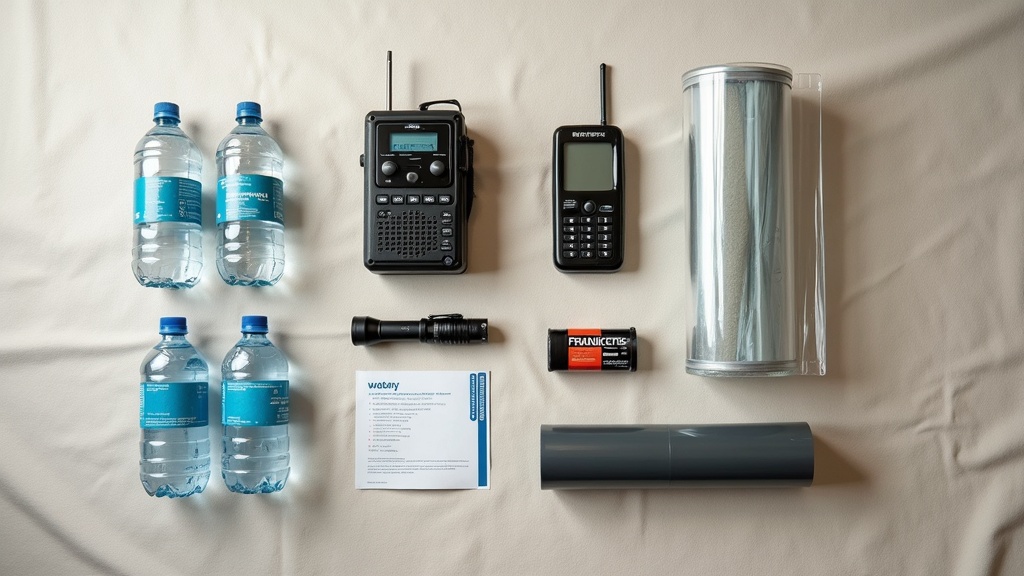
FEMA’s standard is one gallon per person per day for drinking and basic sanitation. For a household of four, a 72-hour supply is 12 gallons minimum. That does not include pets, medication preparation, or the reality that sanitation needs rise under stress. If your home relies on an electric well pump, stored jugs are not a complete solution for extended outages, they are a bridge that runs out.
The question is not whether you have water on hand. It is whether your water plan holds through day three when stored supplies are running low and services have not resumed.

📦 Recommended: Water Freedom System
If a storm knocks out power or disrupts municipal service, dependable water becomes a household priority fast. A backup water solution can help bridge the gap when stored supplies run low.
Power loss and the communication gap that follows it
The 2026 hurricane season opened with Tropical Storm Arthur striking Louisiana on June 30, the same day severe storms were declared in Mississippi, Missouri, Wisconsin, and Michigan. That simultaneity matters. Emergency responders, cell towers, and utility crews are finite resources. When multiple regions are hit at once, restoration timelines stretch, and communication systems become unreliable long before power returns.
A battery-powered or hand-crank weather radio connected to the NOAA Weather Radio All Hazards network is one of the most practical items a household can own. Cell service and internet are among the first systems to degrade under heavy storm damage. A dedicated radio keeps you connected to National Weather Service alerts and local emergency management updates even when nothing else works.
Beyond the radio, power planning comes down to three decisions made before any event: Where are the flashlights, and do they have fresh batteries? Are power banks charged and accessible? And does everyone in the household know the out-of-area contact number by memory, not just saved in a phone that may be dead?
Documents, home security, and the items that protect your recovery
A disaster’s financial aftermath often drags on longer than the physical damage. Insurance claims, FEMA assistance applications, and medical continuity all require documentation that is easy to lose when a home floods or evacuates under pressure. Insurance policies, photo IDs, prescription records, and key account numbers belong in a waterproof folder or a secure digital backup that you can access from anywhere.
Home hardening for storm events is also worth time now, before any advisory is issued. Patio furniture, gas grills, garden tools, trash bins, and decorative items become wind-driven projectiles during severe storms. Garage doors are frequently the weakest structural point in a home during high wind events. Shutters and storm panels should be tested and confirmed operational, not assumed to be ready. A few hours of methodical exterior work before a season begins is worth more than the same work attempted in the 48-hour window before a storm makes landfall.
Higher-risk zones: coastal, floodplain, and wildland-urban interface households
If your property sits in a FEMA-designated flood zone, a hurricane evacuation zone, or a wildland-urban interface area, the overlap between residential development and fire-prone vegetation, your plan needs an additional layer. These zones share a characteristic: the window between “watch” and “evacuate” can compress without warning.
Know your evacuation zone designation now, not during the event. Map your primary and backup routes. Identify where you would go and how long the drive takes in heavy traffic. If your household includes older adults, young children, people with mobility limitations, or pets, each of those factors adds complexity that needs to be solved in advance, not improvised.
Medical continuity is a specific vulnerability in extended disaster scenarios. For households managing chronic conditions, a 72-hour supply of prescriptions, plus written dosage instructions kept with your documents, can be the difference between a manageable disruption and a medical crisis.
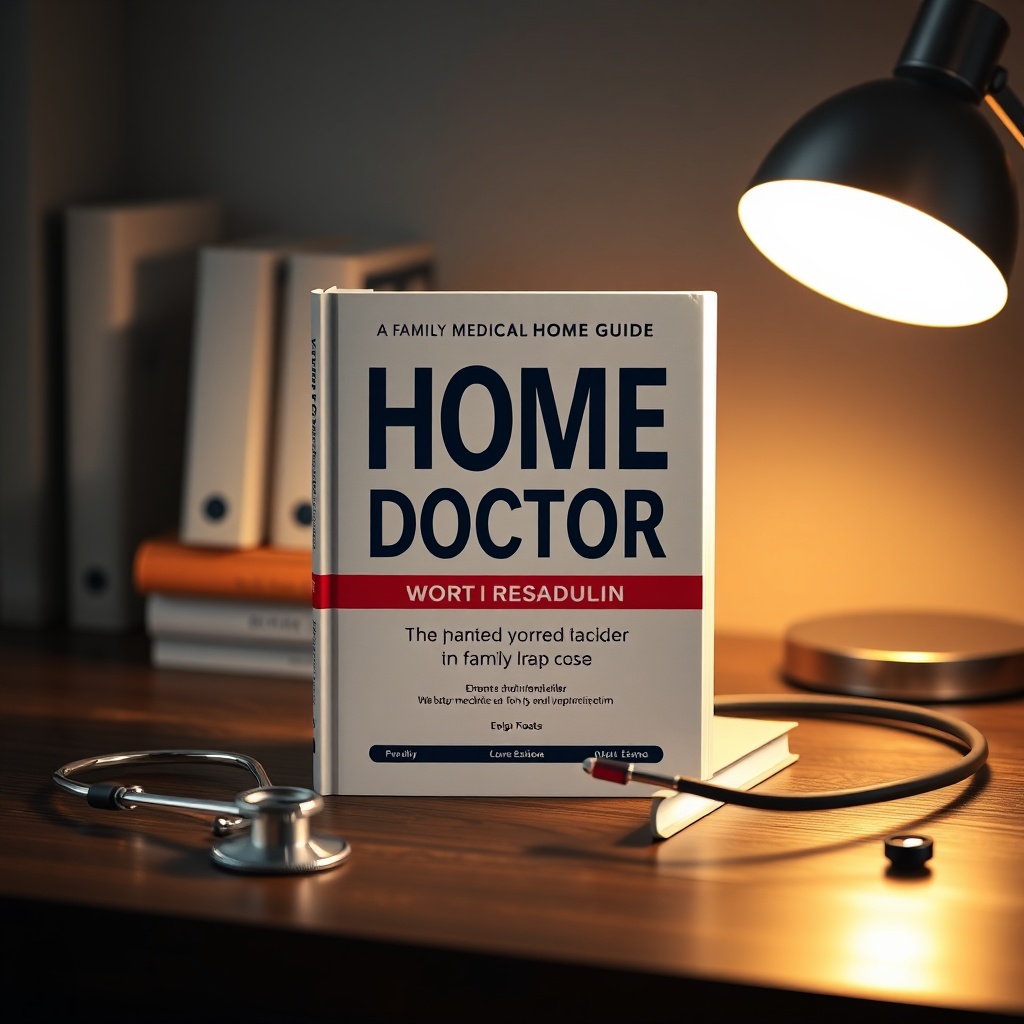
📦 Recommended: Home Doctor
When storms interrupt power, roads, or access to care, a practical medical reference can help you handle common problems at home until services resume.
Frequently asked questions
Why does Tennessee have 16 federal disaster declarations since 2021, more than Florida?
Tennessee’s disaster record reflects repeated inland flooding and severe storm events, not tropical weather. The state sits in a region where slow-moving storm systems stall over complex terrain, producing catastrophic flash flooding. The August 2021 Humphreys County flood, which killed 20 people, is one example. Federal disaster declarations follow documented damage and unmet recovery needs. Tennessee has both in volume.
Is a storm surge from a lower-category hurricane more dangerous than wind?
For many coastal areas, yes. NOAA’s National Hurricane Center consistently emphasizes that storm surge, the abnormal rise of water pushed ashore by a storm, is historically the leading cause of hurricane-related fatalities in the United States. Category ratings describe maximum sustained wind speeds, not surge potential. A large, slow-moving Category 2 storm can produce more dangerous surge than a compact, fast-moving Category 4. Your local evacuation zone map, not the storm category, is the right metric for evacuation decisions.
If I live inland and not in a hurricane zone, why does the Tropical Weather Outlook matter to me?
Tropical systems that make landfall frequently weaken into tropical depressions and then merge with other weather systems as they move inland, but they retain enormous amounts of moisture. The flooding that follows former hurricanes has caused major losses in states hundreds of miles from the coast. Additionally, FEMA’s data from 2021 onward shows that severe storms and floods, which can accompany or follow any tropical system, are responsible for far more federal declarations than hurricanes alone. The outlook is a prompt to act on preparedness that applies regardless of your distance from the coast.
What to do before the next named storm appears
- Confirm your zone: Look up your address on your county’s emergency management site or fema.gov to verify flood zone and evacuation zone status.
- Store 72 hours of water: One gallon per person per day, minimum. Add a backup plan for extended outages if you rely on a well pump.
- Secure outdoor items and test shutters: Do this now, while there is no time pressure.
- Waterproof your documents: Insurance, IDs, prescriptions, and key contacts in one place, physical and digital.
- Charge everything and test your radio: Power banks, flashlight batteries, and a NOAA-capable weather radio.
- Write down your evacuation plan: Routes, destination, out-of-area contact, and any household-specific needs for medical, mobility, or pets.
- Follow weather.gov and fema.gov: Not every update requires action, but both sites provide the authoritative information when conditions change.
Get real disaster prep, decoded from FEMA, NOAA & USGS.
One short email when something actually matters for your zip code. No spam, ever.