
The Importance of Proactive Hurricane Planning in Tampa
Developing a comprehensive hurricane emergency kit for Tampa, FL, is a critical life-safety requirement for every resident living in the path of potential Gulf Coast storms. With the Atlantic hurricane season officially beginning in June, now is the time to finalize your preparations. Current modeling indicates that being self-sufficient for at least 72 hours is essential for survival during major weather events.
Your county's real disaster history, what to do first, and what to keep at home. Free, and it shows up right here.
🔒 We never sell your email. Unsubscribe in one click.
Current Risk Status: Tampa, Florida
As of March 2025, our real-time monitoring of FEMA.gov and weather.gov indicates no active hurricane-related alerts for the Tampa Bay area. While the USGS.gov earthquake monitoring service reports seismic activity in distant regions, Tampa remains primarily vulnerable to tropical cyclone activity. It is vital to maintain your kit year-round, as storm trajectories can shift rapidly once the season commences.
The Tampa Hurricane Emergency Kit Checklist
This checklist is designed specifically for the unique environment of Tampa, where storm surge and power outages are the primary threats. Ensure your kit is stored in a waterproof, portable container.
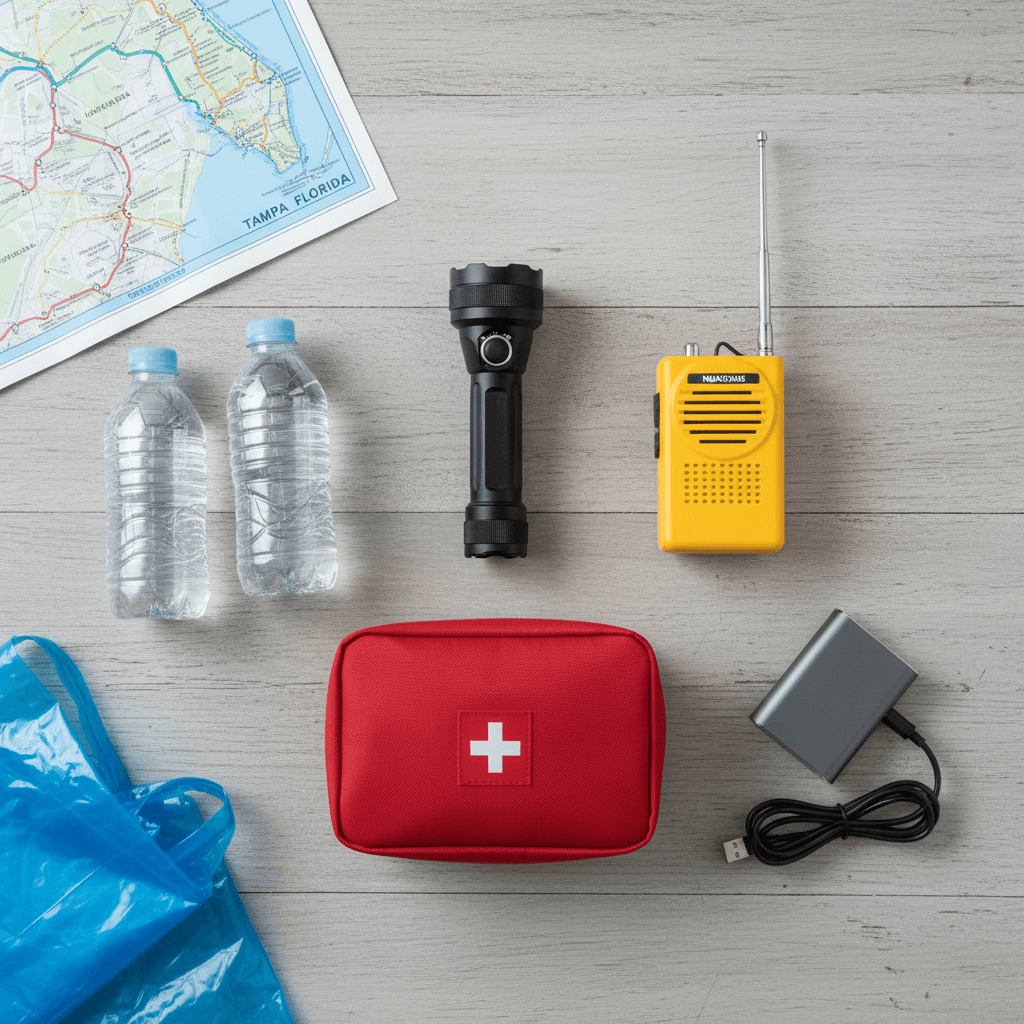
- Water: One gallon per person per day for at least three days.
- Non-perishable food: A three-day supply of canned goods, protein bars, and dry snacks.
- Manual can opener: Essential for accessing food supplies during extended power outages.
- Battery-powered or hand-crank radio: To receive NOAA weather alerts when cellular networks fail., see our picks in the best NOAA weather radios for Tampa hurricanes.
- Flashlights and extra batteries: Avoid candles due to fire risks during storm damage.
- First aid kit: Include prescription medications, bandages, antiseptic, and pain relievers.
- Whistle: To signal for help if you become trapped in debris.
- Dust mask: To help filter contaminated air following building damage.
- Wrench or pliers: To turn off utilities if instructed by local authorities.
- Local maps: Physical maps are necessary if GPS services are unavailable.
- Important documents: Copies of insurance policies, IDs, and bank records in a waterproof bag.
- Sanitation supplies: Moist towelettes, garbage bags, and plastic ties for personal hygiene.
Strategic Preparedness for Tampa Residents
Living in Tampa requires specific attention to storm surge zones. Before the season hits, identify your evacuation zone using official county resources. If you live in a mobile home or a low-lying area, your emergency plan must prioritize early evacuation over sheltering in place. For more on other risks, see our guides on flood preparedness and power outage preparedness.
Official Local Resources
Stay informed through verified government channels. Avoid relying on social media rumors during an active event.
- Hillsborough County Emergency Management: Official County Portal
- Florida Division of Emergency Management: FloridaDisaster.org
Frequently Asked Questions
How much water should I store per person?
You should store at least one gallon of water per person per day for a minimum of three days. This amount is necessary for both drinking and basic sanitation. If you have pets or family members with specific medical needs, consider increasing this supply to account for their requirements during prolonged utility failures.
Where is the best place to store my emergency kit?
The best place to store your kit is in a cool, dry, and easily accessible location inside your home. If you live in a high-risk flood zone, ensure the kit is stored on an elevated floor rather than a basement or ground-level garage to prevent water damage during a storm surge event.
Should I keep my documents in the kit?
Yes, keeping physical or digital copies of vital documents in a waterproof, fireproof container is essential. Include identification, insurance policies, medical records, and property deeds. Having these readily available can significantly expedite the process of filing insurance claims or accessing government assistance programs in the immediate aftermath of a hurricane.
How often should I rotate my emergency supplies?
You should inspect and rotate your supplies at least every six months. Check expiration dates on food and water, replace batteries in flashlights, and ensure that any prescription medications remain effective. A good rule of thumb is to perform this check every time you adjust your clocks for Daylight Saving Time.
What should I do if I have pets?
Include your pets in your emergency planning by packing a dedicated kit for them. This should include at least three days of food, water, a leash or carrier, vaccination records, and a photo of you with your pet for identification purposes. Ensure your pet is microchipped and that your contact information is current.
Disclaimer
The information provided by USRiskRadar is for educational purposes only and does not constitute professional emergency management advice. Disaster preparedness involves inherent risks. Always follow directives from local, state, and federal authorities during an emergency. We are not responsible for any actions taken based on this content.
Get real disaster prep, decoded from FEMA, NOAA & USGS.
One short email when something actually matters for your zip code. No spam, ever.