
Since January 2021, FEMA has declared 351 federal disasters across the United States. Not 351 storms. Not 351 close calls. Declared disasters, events severe enough that state governments formally requested federal assistance and received it. That number works out to roughly one new federal declaration every four days, for five and a half years running. And the distribution is not what most families expect when they picture “disaster preparedness.”
Your county's real disaster history, what to do first, and what to keep at home. Free, and it shows up right here.
🔒 We never sell your email. Unsubscribe in one click.
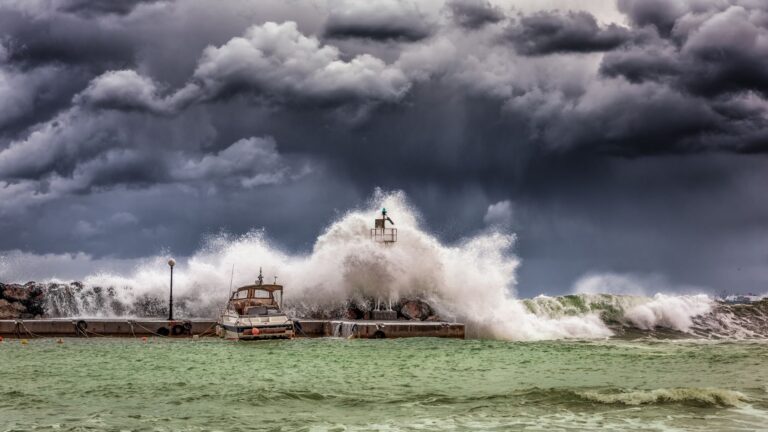
Hurricanes, the event most Americans think of first, account for 31 of those 351 declarations. Severe storms, the category covering the kind of violent thunderstorm complex that can knock out power to an entire county, flood a basement, and down trees across every evacuation route, account for 140. Floods add another 78. Together, those two categories make up nearly two-thirds of every federally declared disaster in the country since 2021. The practical implication is uncomfortable: most households are preparing for the wrong scenario, or preparing for the right one but with the wrong level of urgency.
This post breaks down what the real FEMA disaster record tells you, which states are absorbing the most declarations, and how to close the gap between official guidance and what a real household can actually execute in the first 72 hours after something goes wrong.
📊 Across the United States: Federally Declared Disasters (2021–2026)
351 major disaster declarations were issued in this period, according to FEMA records.
| Disaster type | Declarations |
|---|---|
| Severe Storm | 140 |
| Flood | 78 |
| Hurricane | 31 |
| Winter Storm | 22 |
| Fire | 20 |
| Tropical Storm | 17 |
| Severe Ice Storm | 9 |
| Tornado | 9 |
States with the most declarations
| State | Declarations |
|---|---|
| AK | 18 |
| TN | 16 |
| CA | 16 |
| KY | 14 |
| MT | 13 |
| MO | 12 |
| KS | 12 |
| NE | 11 |
Most recent declarations
| Date | Type | Event |
|---|---|---|
| 2026-06-30 | Flood | Severe Storms, Tornadoes, And Flooding (Wi) |
| 2026-06-30 | Flood | Severe Storms, Tornadoes, And Flooding (Mi) |
| 2026-06-30 | Severe Storm | Severe Storms, Straight-Line Winds, Tornadoes, And Flooding (Ms) |
| 2026-06-30 | Severe Storm | Severe Storms, Straight-Line Winds, Flooding, Landslides, And Mudslides (Id) |
| 2026-06-30 | Typhoon | Super Typhoon Sinlaku (Gu) |
| 2026-06-30 | Tropical Storm | Tropical Storm Arthur (La) |
Source: FEMA OpenFEMA Disaster Declarations · retrieved 2026-07-20 by US Risk Radar.
Severe storms are the dominant threat, not hurricanes
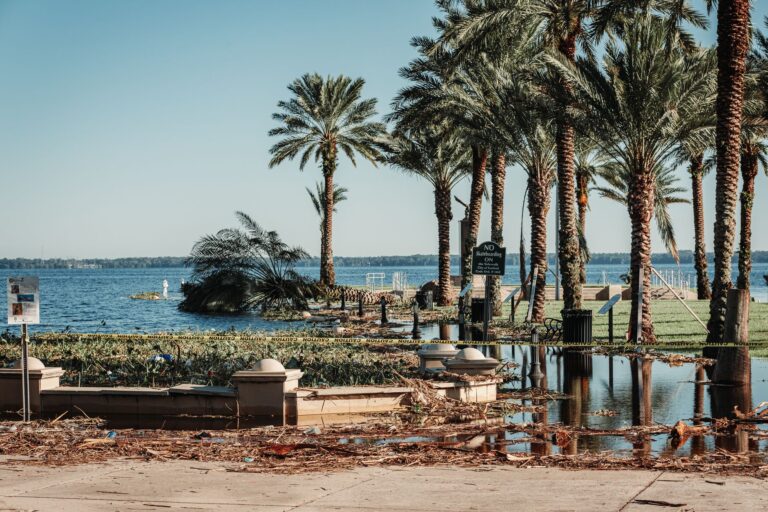
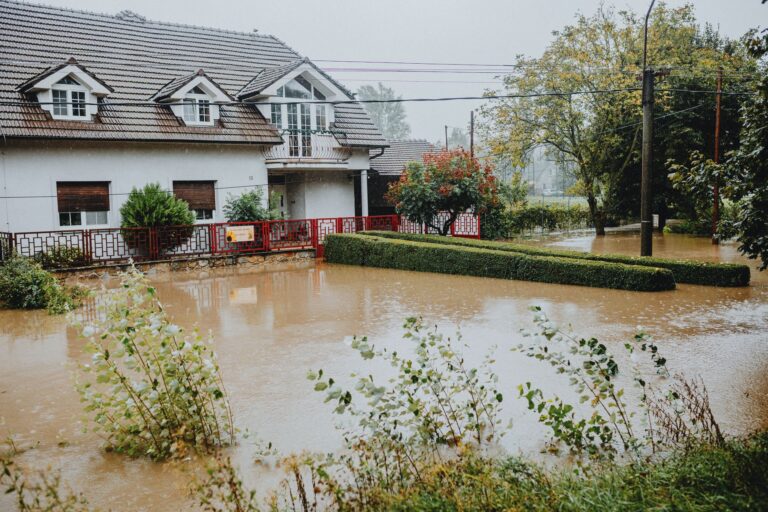
The single biggest takeaway from the FEMA declaration data is that severe storms (140 declarations) and floods (78) dwarf every other category combined. These are not slow-moving threats with five-day forecast cones. A severe storm complex can move from watch to warning to power outage in under two hours. Flash flooding, the type most commonly tied to these events, kills more Americans per year than any other weather hazard, according to the National Weather Service at weather.gov.
This matters for how you prepare because the lead time is different. With a hurricane, you may have 48–72 hours of warning and a clear geographic track. With a severe storm or flash flood event, you may have 90 minutes of useful warning, if that. The preparedness actions that help you most in those scenarios are not the same ones that dominate the “hurricane prep checklist” genre.
For severe storm and flash flood events specifically, the actions that move the needle are:
- Knowing your local flood zone before the storm: FEMA’s flood map service at msc.fema.gov lets you look up any address. If you are in a Zone A or AE, “shelter in place” is not always a safe option during heavy rain events.
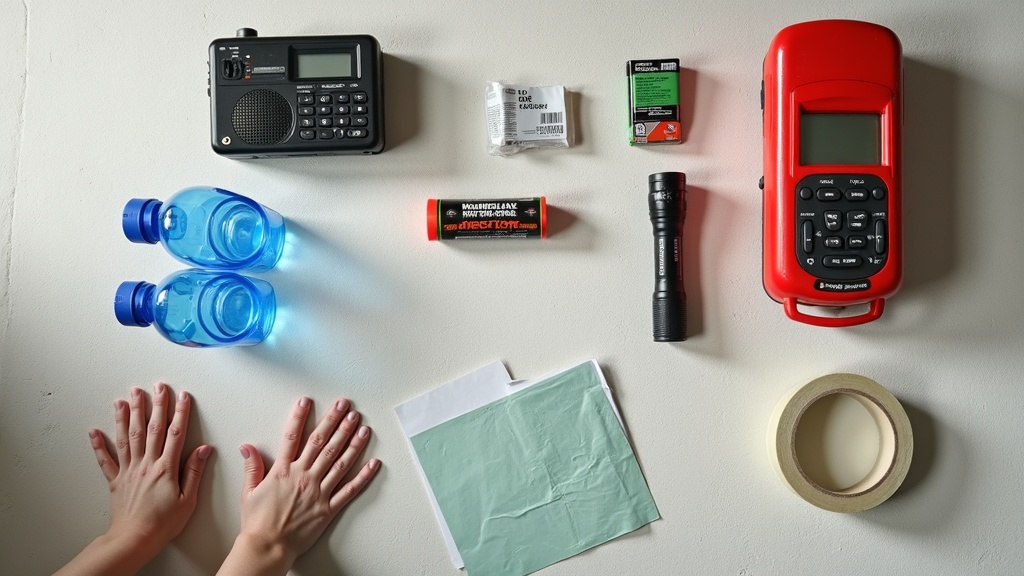
- Having a battery-powered NOAA weather radio: Cell alerts are useful but can lag. A dedicated weather radio receiving NWS broadcasts from weather.gov is faster and works when towers are overloaded.
- Pre-charging your backup power before the season, not before a specific storm: Severe storm events often arrive before you have time to charge anything.
- Knowing two routes out of your neighborhood: A single downed tree or flooded underpass can strand you if you have only one mental map of how to leave.
The states absorbing the most declarations, and what that pattern means
Alaska leads all states with 18 federal disaster declarations since 2021. Tennessee and California follow at 16 each. Kentucky has 14, Montana 13, Missouri and Kansas 12 each, and Nebraska 11. Look at that list carefully: it includes a subarctic state, two Gulf-adjacent states, two Great Plains states, a Rocky Mountain state, and California. There is no clean regional pattern. The common thread is not geography, it is the frequency of compound weather events.
Tennessee’s 16 declarations, for example, are driven almost entirely by flooding and severe storms, not hurricanes. Kentucky’s 14 reflect similar patterns, plus tornado events. California’s 16 span wildfire, flood, and winter storm declarations. What this tells a household anywhere in the country is that waiting for “your” disaster type to be in the forecast before you take preparedness seriously is a losing strategy. The record shows that federal disaster conditions arise across every climate, every season, and every region.
The most recent declarations in the record underscore this. On a single day. June 30, 2026. FEMA processed declarations for flooding in Wisconsin, flooding in Michigan, severe storms in Mississippi, severe storms in Idaho, a super typhoon in Guam, Tropical Storm Arthur in Louisiana, severe storms in Missouri, and wildfires in Nebraska. Eight declarations. One day. Five different disaster types. That is not an anomaly in this dataset. That is the baseline.
Where the 72-hour window actually breaks down
FEMA’s core preparedness standard, the ability to function without outside assistance for 72 hours, is the right benchmark. The problem is not that families reject it. The problem is that most households have a 72-hour kit in theory and a 12-hour kit in practice.
The gaps that show up repeatedly when declarations get filed are predictable:
Water: FEMA recommends one gallon per person per day at ready.gov/kit. A family of four needs 12 gallons minimum for three days. Most households that “have water stored” have a case of 16-oz bottles, roughly 2.5 gallons total. That is a gap of nearly 10 gallons before you account for pets, sanitation, or the reality that physical stress and heat increase consumption.
Medications: A 72-hour supply of prescription medications sounds simple. In practice, many insurance plans restrict early refills. The time to solve that problem is not the day before a storm makes landfall. Talk to your pharmacist now about an emergency supply option, and keep a written list of medications, dosages, and prescribing physicians in a waterproof bag with your documents.
Decision timing: The costliest preparedness failure in severe weather is not a missing flashlight. It is a family that waits too long to make a movement decision. Set a threshold in advance, a specific warning type, a specific road condition, a specific forecast track, that automatically triggers your evacuation plan. Decisions made under stress, in the dark, with children asking questions and phones buzzing with conflicting information, are reliably worse than decisions made calmly in advance.
Post-storm energy budget: People consistently underestimate how depleted they feel in the 24–48 hours after a major event. Debris removal, insurance documentation, checking on neighbors, dealing with a house that is 85 degrees inside, all of it costs physical and cognitive energy. If your “kit” is just supplies, you are missing the planning layer that makes those supplies usable.
The three actions worth doing this week
Given the actual disaster record, dominated by severe storms and flooding, distributed across every region, occurring on a roughly four-day cycle nationally, here is where to put your time if you have limited bandwidth:
- Close the water gap. Buy four one-gallon jugs per household member. Store them somewhere cool and note the expiration date. That single action addresses the most common gap in household preparedness and costs under $15 for a family of four.
- Set a written decision threshold for evacuation. Write one sentence: “We leave when [specific condition].” Put it on the refrigerator. That sentence eliminates the most dangerous decision point in a fast-moving storm event.
- Look up your flood zone tonight. Go to msc.fema.gov, enter your address, and find out whether your property sits in a mapped flood zone. If it does, your shelter-in-place assumptions for flood events need to change.
None of these take more than an hour. All three directly address the failure patterns visible in the FEMA declaration record.
Get real disaster prep, decoded from FEMA, NOAA & USGS.
One short email when something actually matters for your zip code. No spam, ever.