
The Reality of Hurricane Risk in Miami
Preparing for a hurricane in Miami is not a seasonal chore but a vital necessity for every resident living in South Florida. With the Atlantic hurricane season officially beginning on June 1st, now is the time to finalize your safety plans. For the fundamentals that apply to every US coastal city, see our Hurricane Preparedness guide. Current data shows that while there are no immediate local hurricane threats, proactive readiness remains the gold standard for survival.
Your county's real disaster history, what to do first, and what to keep at home. Free, and it shows up right here.
🔒 We never sell your email. Unsubscribe in one click.
Current Risk Status: Miami, FL
Based on the latest data from the National Weather Service (NOAA), there are currently no active hurricane or tropical storm alerts for Miami-Dade County. Furthermore, USGS seismic monitoring reports no significant earthquake activity impacting the Florida peninsula at this time. While current conditions are calm, Miami remains in a high-risk zone for tropical cyclones. We monitor FEMA declarations continuously to ensure you have the latest situational awareness regarding federal disaster support.
Comprehensive Hurricane Preparedness Checklist for Miami
Use this checklist to organize your preparations during the spring months before the peak of the season arrives.
- Review Insurance Policies: Ensure your home and flood insurance are up to date; note that flood insurance typically requires a 30-day waiting period.
- Strengthen Your Home: Install hurricane shutters or impact-resistant windows. If you do not have these, precut 5/8-inch marine plywood for all windows.
- Clear Your Yard: Remove dead trees and trim branches that could become projectiles during high winds.
- Document Valuables: Create a digital inventory of your home contents by photographing every room and storing the files in a secure cloud account.
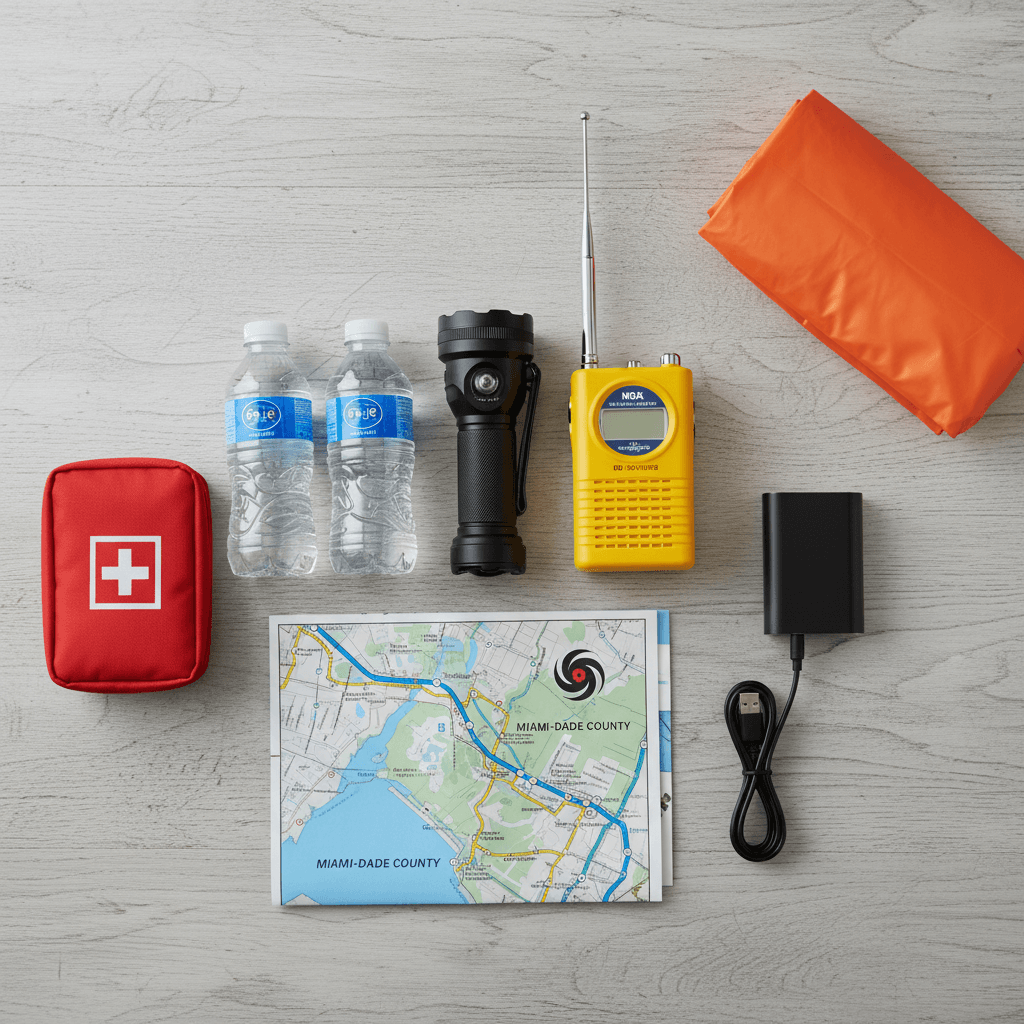
- Assemble a Go-Bag: Pack essential documents, medications, and contact lists in a waterproof container.
- Stock Non-Perishables: Maintain a supply of food and at least one gallon of water per person per day for at least seven days.
- Check Communication Devices: Ensure you have a battery-powered or hand-crank NOAA weather radio to receive updates if cellular networks fail.
- Plan Your Evacuation Route: Identify your Miami-Dade evacuation zone and confirm where you will stay if an order is issued.
- Fuel Up: Keep your vehicle gas tank at least half-full throughout the hurricane season to avoid long lines at stations.
- Secure Outdoor Items: Have a plan to bring patio furniture, grills, and potted plants inside as soon as a watch is issued.
- Test Your Generator: If you own a portable generator, test it now and ensure you have enough stabilized fuel stored safely., see our guide to the best portable generators for Miami hurricanes if you still need to buy one.
- Establish a Communication Plan: Designate an out-of-state contact person whom all family members can notify once they are safe.
Local Resources for Miami Residents
Stay informed through official local channels:
For more information on other threats, see our flood preparedness and wind preparedness guides.
Frequently Asked Questions
When should I begin my hurricane preparations?
You should begin your preparations in the spring, well before the June 1st start of the Atlantic hurricane season. Completing tasks like tree trimming, insurance reviews, and supply stocking in the spring ensures you are not rushing when a storm is actually approaching your area.
How do I know if I need to evacuate?
You must follow the instructions provided by Miami-Dade County officials. Evacuation orders are based on your specific location within an evacuation zone, which is determined by your vulnerability to storm surge. Always listen to local news and official county emergency management channels.
What should I do if my home is not hurricane-proof?
If your home lacks impact-resistant windows or permanent shutters, you must have a plan to secure your windows with plywood or heavy-duty storm panels. If you live in a mobile home or a vulnerable structure, identify a safe, reinforced shelter where you can relocate well before the storm hits.
How much water should I store for my family?
The standard recommendation is to store at least one gallon of water per person per day for a minimum of seven days. This accounts for both drinking and basic sanitation needs. Keep these supplies in a cool, dark place and rotate them periodically to ensure freshness.
Are hurricane watches and warnings the same?
No, they are very different. A hurricane watch means hurricane conditions are possible in the area, usually issued 48 hours before the expected onset of tropical-storm-force winds. A hurricane warning means hurricane conditions are expected, and you should complete your preparations immediately.
Disclaimer: USRiskRadar.com provides information for educational purposes only. Disaster preparedness requires professional judgment and adherence to local government mandates. Always prioritize the instructions of emergency management officials during a live event.
Get real disaster prep, decoded from FEMA, NOAA & USGS.
One short email when something actually matters for your zip code. No spam, ever.