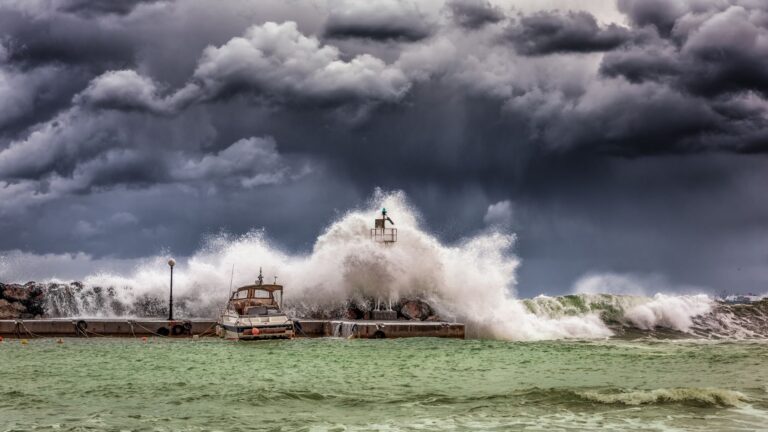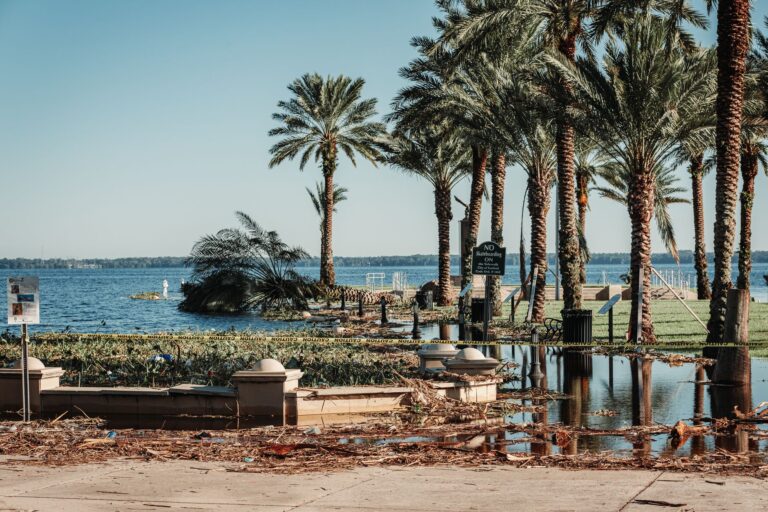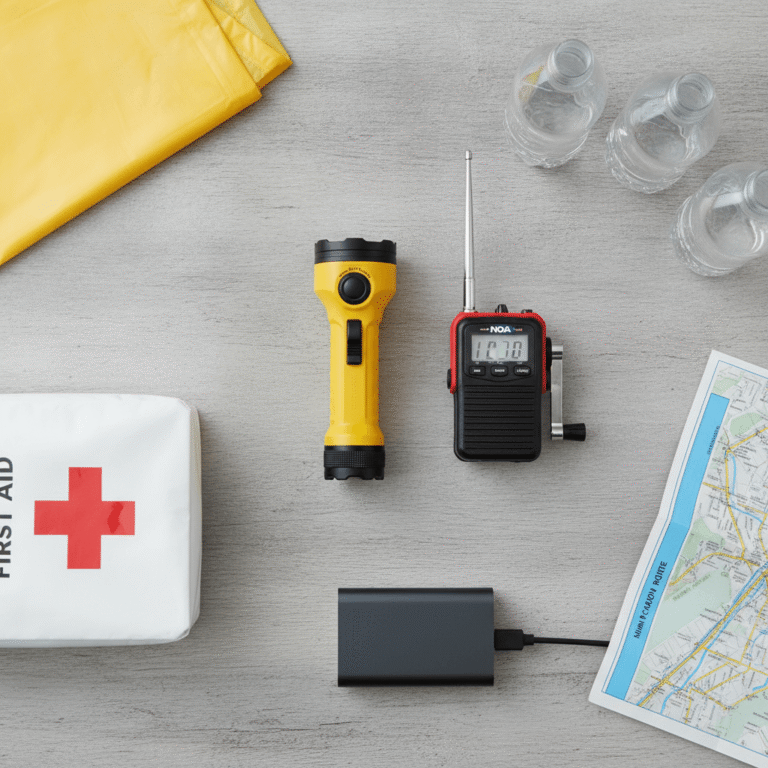

Hurricane season 2026 officially runs from June 1 through November 30, a window set by NOAA based on decades of Atlantic basin storm records. Peak activity clusters between mid-August and mid-October. If your household is not prepared before June 1, you are already behind.
Your county's real disaster history, what to do first, and what to keep at home. Free, and it shows up right here.
🔒 We never sell your email. Unsubscribe in one click.
Affiliate disclosure: This article contains affiliate links. We may earn a commission from qualifying purchases, at no additional cost to you. As an Amazon Associate we earn from qualifying purchases.
Official Season Dates and Why They Are Fixed
NOAA established the June 1 to November 30 window because that is when Atlantic sea-surface temperatures, atmospheric moisture, and low wind shear combine most reliably to support tropical cyclone formation. The fixed calendar is not a prediction for any single year. It is a statistical boundary derived from more than 150 years of storm records maintained in the National Hurricane Center (NHC) historical database.
Because the dates are consistent, emergency managers, insurers, broadcasters, and households can all work from the same planning calendar. That shared baseline matters: hurricane readiness is not only about reacting to a forecast. It is about being ready before a forecast becomes urgent.
The practical rule at US Risk Radar is simple: treat June 1 as a readiness deadline, not a starting line.
2026 Atlantic Hurricane Season Outlook
NOAA releases its official Atlantic hurricane season outlook each May and updates it in August. The outlook categorizes activity as above normal, near normal, or below normal based on projected named storms, hurricanes, and major hurricanes (Category 3 or higher on the Saffir-Simpson Hurricane Wind Scale). For the most current 2026 numbers, check the NOAA Climate Prediction Center outlook page directly, as figures are revised through the season.
As a historical reference point, NOAA’s Hurricane Research Division reports that the average Atlantic season (1991 to 2020 baseline) produces 14 named storms, 7 hurricanes, and 3 major hurricanes. Years with above-normal sea-surface temperatures in the Atlantic main development region tend to exceed those averages.
Season Timeline: What Each Phase Means for Preparedness
| Phase | Approximate dates | Primary risk | Household action |
|---|---|---|---|
| Early season | June 1 to July 31 | Gulf of Mexico and Caribbean development | Finalize 72-hour kit, test backup power, review insurance |
| Peak season | August 1 to October 15 | Deep Atlantic major hurricanes | Monitor NHC daily, recheck supplies monthly, keep vehicle fueled |
| Late season | October 16 to November 30 | Western Caribbean and Gulf storms | Do not stand down, October storms have caused significant damage historically |
Source: NHC Atlantic Climatology, 2024.
What NOAA, FEMA and USGS Each Tell You
Three federal agencies provide distinct, complementary information during hurricane season 2026. Understanding what each covers helps you use their guidance correctly.
NOAA and the National Hurricane Center monitor the atmosphere and ocean, issue watches and warnings, and publish the forecast cone. The cone shows the probable track of the storm center, but damaging wind, rain, flooding, and tornadoes regularly occur well outside the cone boundary. Do not use the cone edge as your personal risk boundary.
FEMA focuses on household and community readiness. FEMA’s standard benchmark is a 72-hour emergency supply kit (Ready.gov, 2024), meaning your household can manage basic needs for three days without outside help. Utility restoration, supply restocking, and road access can all take longer after a significant storm, so treat 72 hours as a minimum, not a ceiling.
USGS provides post-landfall data on river levels, flood extent, storm surge, and landslide risk. If your property is near a waterway, bay, barrier island, or steep terrain, monitor the USGS Natural Hazards page during and after a storm. Heavy rainfall can produce dangerous flooding hours after the center has passed.
72-Hour Household Checklist
The FEMA Ready.gov kit guidance (2024) and the American Red Cross supply list both anchor the following essentials. Verify these items before June 1 each year.
- Water: at least one gallon per person per day for three days (FEMA Ready.gov, 2024)
- Food: nonperishable items for three days, including a manual can opener
- Flashlights and fresh batteries
- Portable phone charger and backup power bank
- Prescription medications and basic first aid supplies
- Copies of IDs, insurance documents, and emergency contacts in waterproof storage
- Pet food, leash, carrier, and vaccination records
- Cash in small bills
A 3-Year Hurricane Preparedness Calendar
Spreading tasks across a three-year cycle keeps the work manageable and prevents costly last-minute scrambles. This structure is consistent with the phased approach recommended in FEMA’s Whole Community preparedness framework.
| Year | Focus | Key tasks | Estimated time needed |
|---|---|---|---|
| Year 1 | Build the baseline | Assemble 72-hour kit, label shutoffs, store documents, map evacuation routes, review flood and wind insurance | 4 to 6 hours total |
| Year 2 | Stress-test the plan | Run a household drill, test generator or battery backup, replace expired food and medicines, confirm cooking and lighting work off-grid | 2 to 3 hours total |
| Year 3 | Upgrade and simplify | Reduce storage clutter, add missing items found in drills, improve window protection, update contact and school pickup plans | 2 to 4 hours total |
What to Do in the First 24 Hours When a Storm Is Forecast for Your Region
- Check the National Hurricane Center for the official forecast cone and track.
- Refill your vehicle with fuel before local demand spikes.
- Charge phones, power banks, and any battery backup systems fully.
- Move outdoor furniture, grills, and loose objects inside or secure them with straps.
- Freeze water bottles to help extend refrigerator food safety if power fails.
- Set aside cash in small bills, since ATMs and card readers may be unavailable after landfall.
- Confirm your household evacuation route and destination using your local emergency management plan (FEMA Ready.gov, 2024).
What to Buy First
If your household does not yet have a complete kit, the single most efficient starting point is a pre-assembled pack that covers the FEMA 72-hour baseline for two people: the Ready America 70280 72 Hour Emergency Kit, 2-Person 3-Day Backpack covers water, food, first aid, light, and shelter essentials in one portable unit you can verify and supplement from this checklist.
Methodology
Statistics and date ranges on this page were drawn from NOAA NHC historical climatology records, FEMA Ready.gov preparedness guidance, USGS natural hazards data, and American Red Cross supply recommendations, all extracted or verified in September 2026. No figures were estimated or projected by US Risk Radar staff.
Updated: 2026-09-16
Frequently asked questions
When does hurricane season 2026 start and end?
Hurricane season 2026 officially starts on June 1 and ends November 30, according to NOAA’s fixed Atlantic basin calendar. Peak activity historically falls between mid-August and mid-October.
How many storms are expected in the 2026 Atlantic hurricane season?
NOAA publishes its official outlook each May and updates it in August. The 1991 to 2020 historical average is 14 named storms, 7 hurricanes, and 3 major hurricanes per season, per NOAA’s Hurricane Research Division.
What is the difference between a hurricane watch and a hurricane warning?
A hurricane watch means hurricane conditions are possible within 48 hours; a hurricane warning means they are expected within 36 hours, according to the National Hurricane Center. A warning requires immediate protective action if you are in the affected zone.
Does the forecast cone show where all storm damage will occur?
No. The NHC forecast cone shows only the probable path of the storm center. Damaging winds, flooding, storm surge, and tornadoes can affect areas well outside the cone boundary.
How long should a hurricane emergency kit last?
FEMA’s minimum standard is 72 hours, or three days, of supplies per person, but FEMA also recommends planning for a longer period if you live in an area where restoration may take more than three days.
Is hurricane season active in October?
Yes. While peak season typically runs through mid-October, the official season extends through November 30, and historically significant storms have made landfall in October and even November.
Updated: September 16, 2026
- LifeStraw Personal Water Filter $15-20
- WaterBrick 3.5 Gallon Water Storage Containers, 6-Pack, BPA-Free $15-25
- Quick Dam Grab & Go Flood Kit – 5x 5ft Barriers & 10x 2ft Bags $20-30