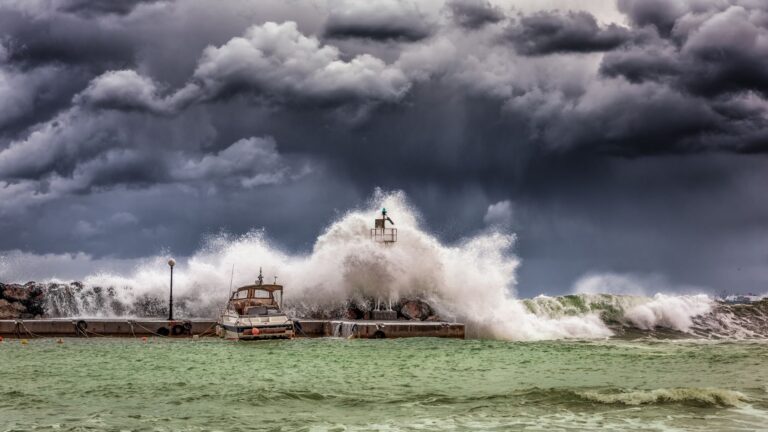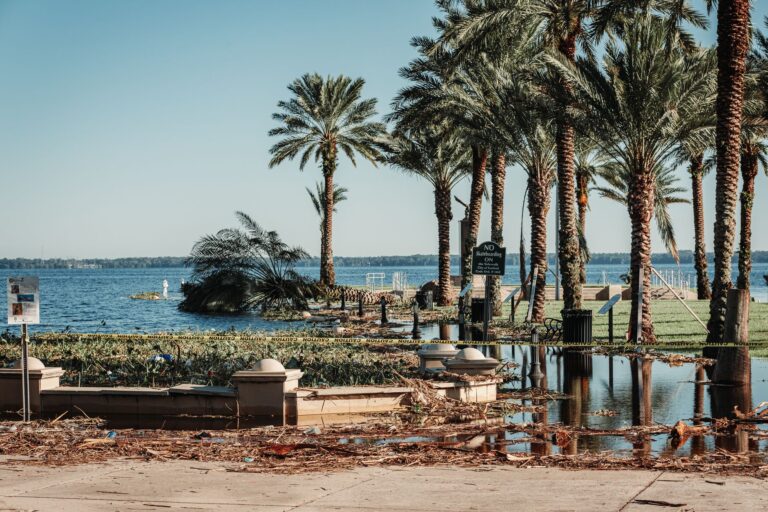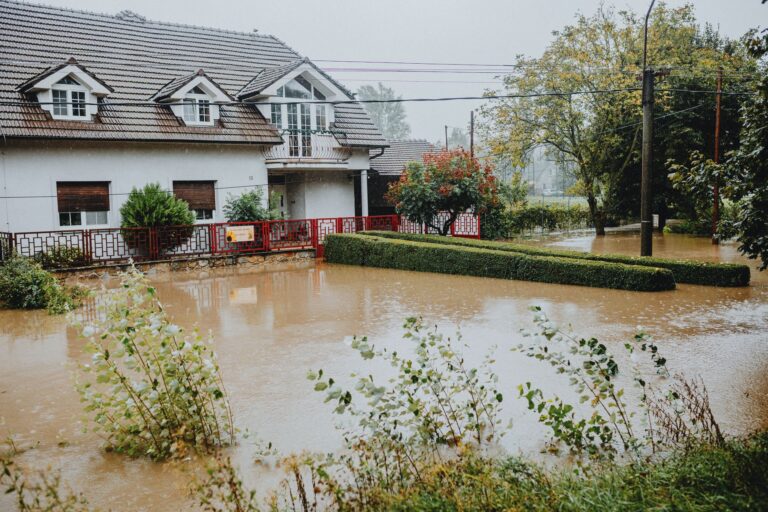

How to prepare for a hurricane comes down to completing specific actions across three time windows: 72 hours out, 48 hours out, and 24 hours out. FEMA and the National Hurricane Center both recommend beginning preparations no later than 72 hours before projected landfall, when evacuation orders are still actionable and store shelves are still stocked.
Your county's real disaster history, what to do first, and what to keep at home. Free, and it shows up right here.
🔒 We never sell your email. Unsubscribe in one click.
Affiliate disclosure: This article contains affiliate links. We may earn a commission from qualifying purchases, at no additional cost to you. Read our full disclosure.
Why Hurricane Prep Is Really Disaster Prep
Since January 2021, FEMA’s OpenFEMA Disaster Declarations dataset (retrieved 2026-07-20) shows 351 federally declared major disasters across the United States. Hurricanes account for 31 of those declarations. Severe storms account for 140, and floods account for 78. That means the most likely disruption your household will face is not a named storm on the Gulf Coast. It is a severe thunderstorm, a flood, or an extended power outage, in states like Tennessee, Kentucky, Missouri, Kansas, or Nebraska.
A hurricane kit built for wind alone misses that picture. The framework below is built for disruption: loss of power, loss of safe water, loss of road access, and loss of communication. Those consequences appear across every major disaster type in the FEMA record.
| Disaster Type | Declarations | Share of Total |
|---|---|---|
| Severe Storm | 140 | 40% |
| Flood | 78 | 22% |
| Hurricane | 31 | 9% |
| Winter Storm | 22 | 6% |
| Fire | 20 | 6% |
| Tropical Storm | 17 | 5% |
| Severe Ice Storm | 9 | 3% |
| Tornado | 9 | 3% |
| Source: FEMA OpenFEMA Disaster Declarations, retrieved 2026-07-20 by US Risk Radar. Total: 351 declarations. | ||
72 Hours Before Landfall: Information, Supplies, and Decisions
At the 72-hour mark, the National Hurricane Center’s forecast cone is still wide, but the projected track is reliable enough to make decisions. This is your window for the most time-consuming tasks.
- Confirm your evacuation zone. Every coastal state publishes zone maps. Look up your zone now, before a storm is named, at your state emergency management agency’s website. Do not wait for a mandatory order to learn whether you are in Zone A or Zone D.
- Fill your vehicle’s gas tank. Gas shortages develop within 24 to 36 hours of a landfall announcement in coastal areas. Fill the tank at 72 hours.
- Withdraw cash. Power outages disable card readers. ATMs empty quickly. The FEMA Ready.gov financial preparedness guidance (2024) recommends keeping small bills on hand before a disaster.
- Store water. FEMA’s emergency water guidance (2024) recommends one gallon per person per day. For a household of four over 72 hours, that is a minimum of 12 gallons. In summer heat, with infants, or without air conditioning, store more. Use food-grade containers and store them above floor level in an interior space, not on a garage floor where floodwater can reach them.
- Gather documents. Birth certificates, insurance policies, prescription records, and identification should be in a waterproof bag or portable fireproof document case. The American Red Cross hurricane preparedness checklist (2025) includes this step explicitly.
- Charge everything. Phones, tablets, power banks, and rechargeable lanterns should be at 100% by the end of the 72-hour window. A power bank of 20,000 mAh or larger can charge a smartphone four to six times.
- Locate your NOAA weather radio. A battery-powered or hand-crank NOAA weather radio receives National Weather Radio broadcasts (NOAA/NWS) when cell towers are overloaded or internet is unavailable. Test it and confirm you have fresh batteries.
48 Hours Before Landfall: Structure, Shelter, and Medications
At 48 hours, the forecast cone narrows significantly. The National Hurricane Center (NOAA, 2025) notes that at 48 hours, track errors average roughly 100 miles, meaning you now know whether you are in the impact zone. Take structural and medical steps here.
- Protect windows and doors. Install pre-cut plywood, storm shutters, or impact film. If you are renting, contact your landlord and document the condition of the unit before the storm.
- Secure or bring in outdoor objects. Patio furniture, grills, potted plants, and decorative items become projectiles in high wind.
- Fill bathtubs. A filled bathtub provides water for flushing toilets if water service is disrupted. The CDC hurricane preparedness page (2025) recommends this step specifically.
- Handle refrigerated medications. If anyone in your household requires insulin or another refrigerated medication, a power outage is a medical emergency. Prepare a small cooler with ice packs and contact your pharmacist about emergency supplies. The FDA emergency medication guidance (2024) outlines options for early refills before a declared disaster.
- Confirm your evacuation plan. If you are not evacuating, identify the safest interior room in your structure, typically a first-floor interior room away from windows. If you are evacuating, confirm your destination and route.
- Check your food supply. FEMA’s emergency food guidance (2024) calls for shelf-stable, ready-to-eat items that do not require refrigeration or cooking. A working 72-hour supply for four people includes peanut butter, canned proteins with a manual can opener, shelf-stable soups, fruit cups, granola bars, and shelf-stable milk. Confirm you have a manual can opener in the kit.
| Supply Item | 1 Person | 2 People | 4 People |
|---|---|---|---|
| Water (gallons) | 3 | 6 | 12 |
| Shelf-stable meals | 9 | 18 | 36 |
| Medications (day supply) | 7+ | 7+ per person | 7+ per person |
| Power bank charges (phone) | 4 to 6 | 8 to 12 | 16 to 24 |
| Flashlight with batteries | 1 | 2 | 2 to 3 |
| Battery or hand-crank NOAA radio | 1 | 1 | 1 |
| Sources: FEMA Ready.gov water guidance (2024), FEMA Ready.gov food guidance (2024), Red Cross hurricane checklist (2025). | |||
24 Hours Before Landfall: Final Actions and Generator Safety
At 24 hours, watches become warnings in most cases. Wind and rain arrive before the center does. Complete all remaining actions before conditions deteriorate.
- Monitor official channels only. Use your NOAA weather radio and the National Hurricane Center website (NOAA/NWS) for track and intensity updates. Social media spreads inaccurate storm information rapidly during high-traffic weather events.
- Charge devices one final time. Top off every rechargeable device before power flickers.
- Move your car to higher ground if flooding is possible. A flooded vehicle is a total loss. If your street or parking area floods during heavy rain events, move the vehicle to a higher location before rain begins.
- Review generator placement. If you own a portable generator, position it at least 20 feet from any window, door, or vent before you need it. The Consumer Product Safety Commission carbon monoxide safety guidance (2024) documents generator-related CO deaths as a recurring post-storm cause of fatalities. Never operate a generator indoors, in a garage, or near an open window.
- Fill a cooler with ice. A full cooler maintains safe food temperatures for 24 to 48 hours if kept closed, according to USDA food safety guidance (2023). Refrigerator food stays safe for roughly 4 hours after power loss if the door remains closed.
- Know where to shelter in place. In a hurricane, shelter in an interior room on the lowest floor above potential flood level. Stay away from windows. If water rises inside your home, move to a higher floor. Never enter a flooded room when you cannot see the floor.
Power Outages: The Most Likely Emergency You Will Actually Face
With 140 severe storm declarations since 2021, roughly 40 percent of all federal disaster declarations, extended power loss is statistically the most common household disruption in the United States. The June 30, 2026 FEMA declarations alone covered severe storms in Mississippi and Idaho, flooding in Wisconsin and Michigan, and a tropical storm in Louisiana, all on the same day, illustrating how simultaneous and geographically broad these events can be.
Power loss changes your kit’s priorities. LED flashlights with fresh batteries, a high-capacity power bank kept at full charge, and a battery or hand-crank NOAA weather radio are not optional items. Replace batteries on flashlights annually, even if they appear unused. Label your power bank with its last charge date and recharge it every three months.
Food Storage: What FEMA Recommends and How to Rotate It
FEMA’s emergency food guidance (2024) calls for shelf-stable items that do not require cooking or refrigeration. The most practical approach is to stock food your household already eats. Familiar food reduces decision fatigue and stress during a disruption. Check expiration dates twice a year, a useful schedule is when clocks change in spring and fall. Rotate items into regular pantry use so nothing expires untouched. Specialty survival bars bought once and forgotten are less reliable than a rotating supply of canned goods and nut butter.
If anyone in your household has dietary restrictions, allergies, or medical dietary requirements, build those specifics into your supply now. An emergency is not the time to discover your kit contains an allergen.
What to Buy First
Before any other purchase, address safe water storage: the WaterBrick 3.5 Gallon Water Storage Containers, 6-Pack, BPA-Free are stackable, food-grade, and designed to store above floor level, which addresses the flood-exposure problem that defeats most improvised water storage solutions.
Methodology
Disaster declaration counts were compiled from the FEMA OpenFEMA Disaster Declarations Summaries v2 dataset, filtered for major disaster declarations from January 1, 2021 through June 30, 2026, and extracted by US Risk Radar on 2026-07-20. Supply quantity guidance derives from FEMA Ready.gov, the American Red Cross, the CDC, and the USDA sources cited inline, accessed between July and September 2026.
Updated: 2026-09-14
Frequently asked questions
How many days of supplies should a hurricane kit contain?
FEMA recommends a minimum of 72 hours (3 days) of supplies for most households, but the agency also notes that a two-week supply is preferable for extended disruptions, particularly in areas prone to flooding or prolonged power outages.
Is one gallon of water per person per day enough in hot weather?
One gallon per person per day is FEMA’s minimum planning figure for drinking, basic food preparation, and hygiene, but the agency notes that heat, physical exertion, illness, and nursing or pregnant individuals all increase that requirement.
Should I shelter in place or evacuate during a hurricane?
Follow official evacuation orders from your local emergency management agency. If an order has not been issued and your structure is outside a flood zone and built to modern wind standards, sheltering in place in an interior room on the lowest safe floor is generally appropriate.
How far from my home does a generator need to be?
The Consumer Product Safety Commission specifies at least 20 feet from any window, door, or vent, and generators should never be operated indoors, in a garage, or in any partially enclosed space because carbon monoxide accumulates rapidly in those environments.
How long does refrigerated food stay safe during a power outage?
USDA guidance states that a refrigerator keeps food safe for approximately 4 hours after power loss if the door stays closed, and a fully packed freezer stays safe for about 48 hours.
Updated: September 14, 2026
- LifeStraw Personal Water Filter $15-20
- WaterBrick 3.5 Gallon Water Storage Containers, 6-Pack, BPA-Free $15-25
- Quick Dam Grab & Go Flood Kit – 5x 5ft Barriers & 10x 2ft Bags $20-30