
Knowing how much water to store for an emergency starts with one number: 1 gallon per person per day, as recommended by FEMA Ready.gov (2024). A household of four needs at least 12 gallons for a three-day kit and 56 gallons for a two-week supply.
Your county's real disaster history, what to do first, and what to keep at home. Free, and it shows up right here.
🔒 We never sell your email. Unsubscribe in one click.
Why Water Storage Is the First Priority
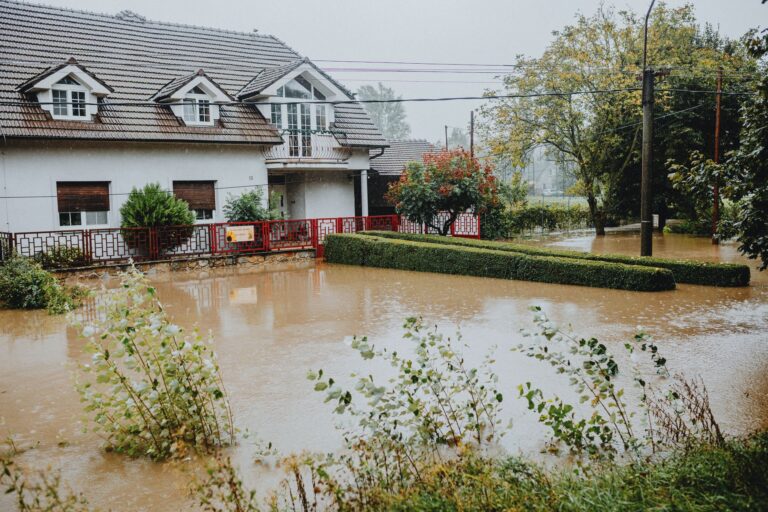
The human body can survive weeks without food but only about three days without water, according to the American Red Cross (2024). Municipal water systems fail during earthquakes, hurricanes, and extended power outages. Boil-water notices issued after floods can last days or even weeks, making stored, treated water essential rather than optional.
FEMA further notes that children, nursing mothers, people who are sick, and those in hot climates or performing heavy work may need two gallons or more per person per day. Plan your total using the higher figure if any household member fits those categories.
Emergency Water Storage Calculator by Household Size and Duration
Use the table below to find your minimum storage target. Figures assume the FEMA baseline of 1 gallon per person per day (2024). The “High-Need” column doubles that figure for vulnerable individuals or hot-weather scenarios.
| Household Size | 3-Day Supply (gal) | 7-Day Supply (gal) | 14-Day Supply (gal) | 14-Day High-Need (gal) |
|---|---|---|---|---|
| 1 person | 3 | 7 | 14 | 28 |
| 2 people | 6 | 14 | 28 | 56 |
| 3 people | 9 | 21 | 42 | 84 |
| 4 people | 12 | 28 | 56 | 112 |
| 6 people | 18 | 42 | 84 | 168 |
| 8 people | 24 | 56 | 112 | 224 |
How to Account for Pets
The FEMA Ready.gov pet preparedness guide (2024) advises storing water for pets separately and at the same daily rate you would use for a small child. A medium-sized dog typically drinks about one liter per day, though this rises with heat and activity. Add that volume directly to your household total when using the table above.
Container Types and Shelf Life
Not every container is safe for long-term water storage. The CDC Emergency Water Supply guidelines (2024) specify the following criteria for safe storage containers.
| Container Type | Recommended | Replace Water Every | Notes |
|---|---|---|---|
| Food-grade plastic (BPA-free) | Yes | 6 months | Look for HDPE with recycling symbol 2 |
| Commercial sealed water bottles | Yes | At printed expiration date | Easiest for rotation; store away from sunlight |
| Glass containers with tight lids | Yes, with care | 6 months | Heavy and breakable; not ideal for evacuation kits |
| Milk jugs (plastic) | No | N/A | Protein residue promotes bacterial growth per CDC |
| Cardboard juice cartons | No | N/A | Not designed for long-term storage; leach over time |
Store all containers in a cool, dark place. CDC (2024) notes that heat and direct sunlight accelerate the breakdown of plastic and can promote algae growth even in sealed containers.
Step-by-Step: How to Fill and Store Water Safely at Home
- Choose food-grade, BPA-free containers with secure, screw-top lids.
- Wash containers with dish soap and rinse completely before filling.
- If using tap water from a treated municipal supply, fill directly from the tap. The CDC (2024) states that no additional treatment is needed if your water comes from a chlorinated municipal source.
- If using a private well or untreated source, add 8 drops of unscented liquid chlorine bleach (6 percent concentration) per gallon before sealing, per CDC guidance (2024).
- Label each container with the fill date using a waterproof marker.
- Store in a location that stays below 70 degrees Fahrenheit and away from direct sunlight, household chemicals, and gasoline fumes.
- Replace water every six months or at the printed expiration date if using commercial bottles.
When Your Stored Water Runs Out: Purification Methods
Even with careful planning, a prolonged emergency can exhaust stored supplies. The CDC Emergency Water Treatment guide (2024) ranks purification methods by reliability.
| Method | Time Required | Removes Bacteria and Viruses | Removes Chemicals | Portable for Evacuation |
|---|---|---|---|---|
| Boiling (rolling boil 1 minute; 3 minutes above 6,500 ft) | 5 to 10 minutes total | Yes | No | Requires fuel |
| Chlorine bleach (unscented, 6 to 8.25%) | 30 minutes wait time | Bacteria and some viruses | No | Yes |
| Iodine or chlorine tablets | 30 minutes wait time | Yes | No | Yes, very compact |
| Filtration plus disinfection | Varies by filter | Yes (combined) | Partial | Yes |
| Commercial sealed bottled water | None | Yes (pre-treated) | Yes (pre-treated) | Yes |
Boiling remains the most reliable method for biological contaminants, according to CDC (2024). Note that boiling does not remove heavy metals, salts, or chemical pollutants, which is why storing clean water in advance is always the preferred approach.
NOAA Disaster Timelines and Why 14 Days Matters
Historical data from NOAA (2024) shows that major hurricanes can disrupt municipal water service for one to four weeks in hard-hit areas. The Department of Energy reports that large-scale power outages caused by extreme weather events have lasted more than two weeks in some regions, which directly affects water treatment and distribution pumping. Planning for 14 days rather than just 72 hours closes that gap for most disaster scenarios.
What to Buy First
If you are starting your water storage from zero, begin with a stackable, food-grade container set: the WaterBrick 3.5 Gallon Water Storage Containers, 6-Pack, BPA-Free holds 21 gallons total, enough for a three-person household for seven days at the FEMA baseline rate. For purification backup when stored water runs out, keep the Potable Aqua Water Purification Tablets (50ct) in your go-bag, as each tablet treats one liter of water per CDC-aligned dosing instructions.
Methodology
Storage volume figures are derived from the FEMA Ready.gov water preparedness dataset and CDC Emergency Water Supply guidelines, both extracted in September 2026. Purification method comparisons are drawn from the CDC Emergency Water Treatment page, same extraction period.
Updated: 2026-09-21
Frequently asked questions
How much water do I need for a 72-hour emergency kit?
FEMA recommends 1 gallon per person per day, so a 72-hour kit for one person requires 3 gallons, and a family of four needs 12 gallons minimum.
Can I store tap water in my own containers?
Yes. The CDC states that water from a chlorinated municipal supply can be stored as-is in clean, food-grade containers and replaced every six months.
How long does commercially bottled water last?
Commercial sealed water bottles are safe until the printed expiration date, but the CDC notes the date reflects taste quality rather than safety, provided the seal remains intact.
Do I need extra water for my pets during an emergency?
Yes. FEMA advises storing pet water separately and at a similar daily rate to a small child, adding that volume to your total household calculation.
Is boiling always enough to make emergency water safe to drink?
Boiling reliably kills bacteria and viruses, but it does not remove chemical contaminants, heavy metals, or salts, so pre-stored treated water is still the safest primary option.
Updated: September 21, 2026
- Ready America 70280 72 Hour Emergency Kit, 2-Person 3-Day Backpack $50-70
- APC Back-UPS 600VA UPS Battery Backup $50-70
- Goal Zero Nomad 10 Foldable Solar Panel with USB Port $80-120