
Last Updated: July 2026 | Based on FEMA federal disaster declaration records
Texas has received 32 federally declared disaster declarations since January 2016. Twenty of those were wildfires. Four were floods. Four were hurricanes. The most recent declaration, logged July 18, 2026, was a flood event. Before that came four consecutive wildfire declarations between February and May 2026, including fires named 8 Ball, Corner Pocket, Hunggate, and Stinky. If you live in Austin and you’ve spent your prep energy on tornado kits while ignoring smoke, ash, and rising water, the official record says you may have the priorities backwards. Our Tornado Preparedness guide covers the tornado side of that priority list.
Your county's real disaster history, what to do first, and what to keep at home. Free, and it shows up right here.
🔒 We never sell your email. Unsubscribe in one click.
That’s not to say tornadoes aren’t a real threat in Central Texas, they are, and this post covers them. But the FEMA data provides a clearer picture of what actually disrupts Texas at the federal scale, and it should reshape how Austin households think about layered preparedness.
📊 TX Federally Declared Disasters (2016–2026)
32 major disaster declarations were issued for TX in this period, according to FEMA records.
| Disaster type | Declarations |
|---|---|
| Fire | 20 |
| Flood | 4 |
| Hurricane | 4 |
| Severe Ice Storm | 2 |
| Winter Storm | 1 |
| Biological | 1 |
Most recent declarations
| Date | Type | Event |
|---|---|---|
| 2026-07-18 | Flood | Flooding |
| 2026-05-18 | Fire | Stinky Fire |
| 2026-05-14 | Fire | Hunggate Fire |
| 2026-03-15 | Fire | Corner Pocket Fire |
| 2026-02-18 | Fire | 8 Ball Fire |
| 2025-07-06 | Flood | Severe Storms, Straight-Line Winds, And Flooding |
Source: FEMA OpenFEMA Disaster Declarations · retrieved 2026-07-19 by US Risk Radar.
Fire Is Texas’s Dominant Federal Disaster. What That Means for Austin
Wildfire may feel like a West Texas or Hill Country problem, but Central Texas brush conditions, combined with hot and dry summers, have pushed ignition risk closer to the metro edge than many residents assume. The string of four fire declarations in early 2026 alone should reset baseline expectations.
For Austin residents, fire preparedness means two things that tornado prep doesn’t:
- Evacuation is the plan, not sheltering in place. When a fire is moving toward your neighborhood, staying put is the danger. Know your evacuation routes out of your specific area, including a backup route if MoPac or I-35 is gridlocked. Travis County’s emergency management office posts zone-based evacuation maps, pull yours before you need it.
- Air quality degrades fast and far from the fire line. The 2025 and 2026 fires produced smoke that reached Austin even when the flames were miles away. Keep N95 masks in your emergency kit, not dust masks, which don’t filter fine particulate. FEMA and the EPA both specify N95 or higher for wildfire smoke. Monitor air quality at AirNow.gov rather than guessing by smell alone.
For the defensible space side of fire prep: clear dead vegetation within 30 feet of your home’s foundation if you’re on the urban-rural edge. Even inside city limits, wood fences and cedar trees adjacent to structures are documented ignition paths.
Flooding Is the Disaster That Keeps Returning
Four of Texas’s 32 federal declarations since 2016 were flood events, including the July 2025 “Severe Storms, Straight-Line Winds, and Flooding” declaration and the most recent July 2026 flooding declaration. Barton Creek, Shoal Creek, and Waller Creek have all flooded with enough force to strand vehicles and damage structures within recent memory. Central Texas sits on the Edwards Plateau, when rain hits, water moves fast over impermeable limestone and has nowhere to slow down.
Two specific actions matter most for Austin flood risk:
- Look up your flood zone before the rain starts. FEMA’s Flood Map Service Center at msc.fema.gov lets you enter your address and pull the official flood zone designation. Residents in Zone AE or Zone X (shaded) face meaningfully different risk profiles. Your lender may already require flood insurance; if they don’t, that doesn’t mean you’re outside the hazard area.
- Turn Around, Don’t Drown is a literal instruction, not a slogan. The National Weather Service Austin/San Antonio office at weather.gov/ewx/ issues flash flood emergencies for Central Texas regularly. Six inches of moving water can knock a person down. Two feet can sweep away a full-size vehicle. If a road is flooded, the depth is unknown and the current is unpredictable.
Tornadoes: Real Risk, Right Protocol
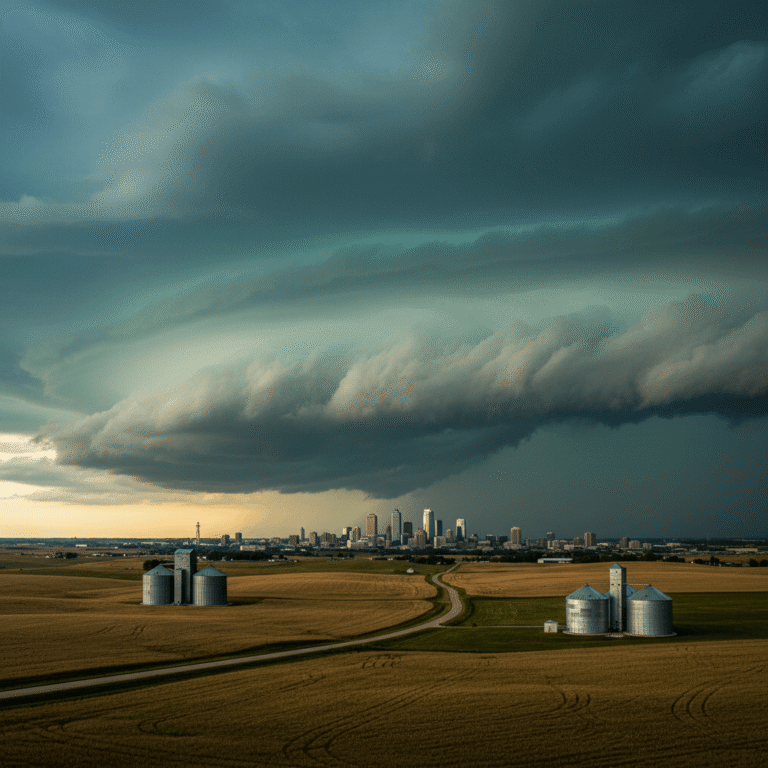
Austin is not in the core of Tornado Alley, but Central Texas does produce tornadoes, particularly during spring storm season when Gulf moisture clashes with drier air from the west. The NWS Austin/San Antonio office is your primary source for watches and warnings, bookmark weather.gov/ewx/ and enable wireless emergency alerts on your phone so warnings push to you automatically.
The protocol is short and shouldn’t need to be memorized under pressure, it should be practiced:
- When a tornado watch is issued: conditions favor tornado development. Get your kit accessible, identify who in your household needs extra time to move, check on neighbors. Don’t wait for a warning to start thinking.
- When a tornado warning is issued: a tornado has been radar-confirmed or sighted. Move immediately to an interior, windowless room on your lowest floor, a bathroom, a closet, a hallway away from exterior walls. Get low and cover your head and neck with your arms or a heavy blanket.
- If you’re in a mobile or manufactured home: leave it. These structures are not built to withstand tornado-force winds regardless of tie-down status. Know the location of the nearest permanent shelter before storm season, not during a warning.
📋 Print this checklist, keep it with your emergency supplies.
The Emergency Kit Austin Households Actually Need
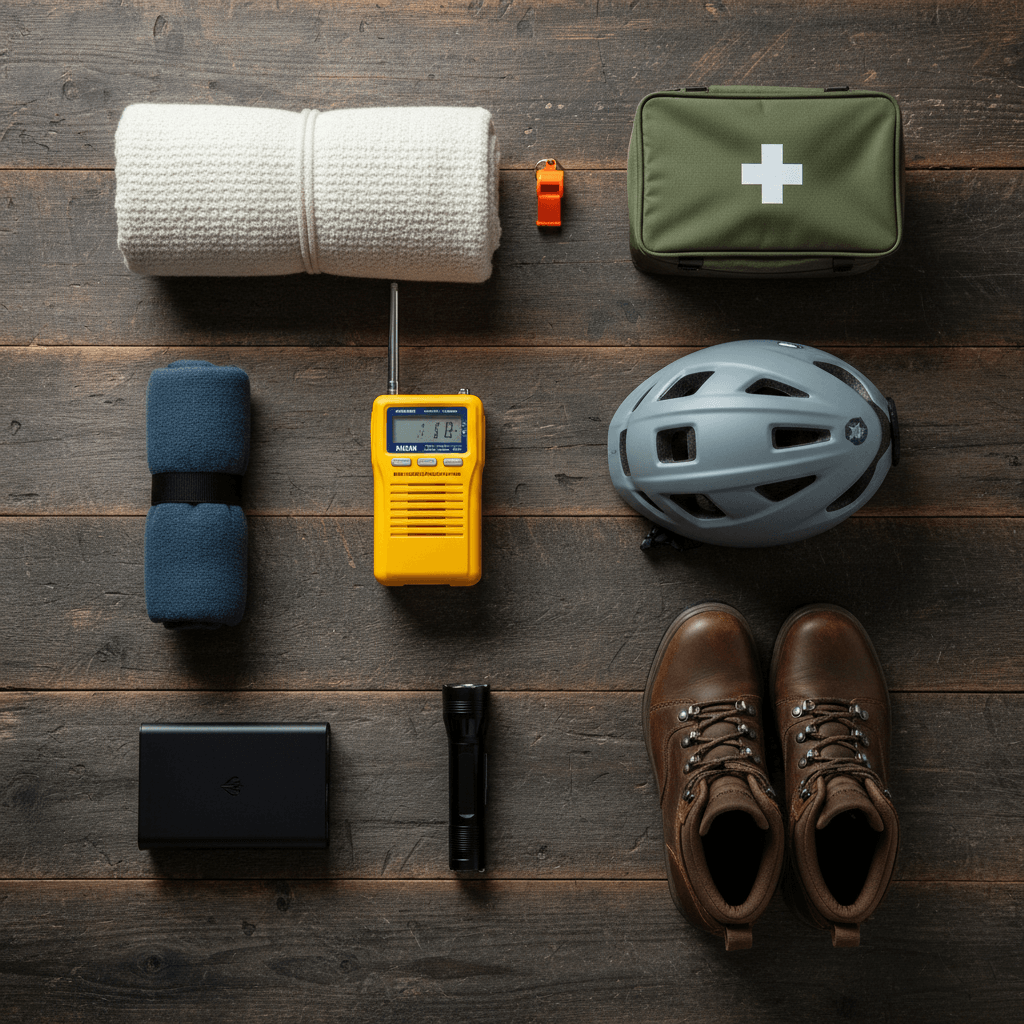
One kit does not cover all three of Texas’s dominant disaster types without adjustment. Here’s how to build one that does:
- Water: One gallon per person per day, minimum three days. Seven days is more realistic for flood isolation or post-fire utility disruption.
- N95 masks: At least two per person. Wildfire smoke and post-flood mold spores both require rated respiratory protection.
- Go-bag ready to move in under five minutes: Fire evacuations can happen with little notice. If your supplies are all in a fixed location inside your home, you may not have time to gather them. A pre-packed bag near the door changes that equation.
- Non-perishable food for at least 72 hours: Canned goods, protein bars, foods that require no cooking if utilities go down.
- Battery-powered or hand-crank NOAA weather radio: Cell towers go down during severe events. A dedicated weather radio tuned to the Austin local frequency keeps you informed when your phone can’t.
- Flashlight with extra batteries, first aid kit, multi-purpose tool.
- Important documents in a waterproof container: ID, insurance policies, medical records, prescriptions. For flood risk especially, keep a digital backup in cloud storage.
- Cash in small bills: ATMs and card readers go offline when power is out.
- Medications for at least a seven-day supply.
📦 Recommended: The Lost Superfoods
Ensure your household has reliable, long-lasting nutrition stored for when supply chains are disrupted by severe spring storms in Texas.
Alerts: Sign Up Before the Season, Not During It
Austin uses the WarnCentralTexas system for local emergency notifications. Register at the City of Austin’s Office of Homeland Security and Emergency Management to receive alerts by text, email, or phone call. This is separate from the federal Wireless Emergency Alert system that pushes to your phone automatically, you want both.
For wildfire-specific updates during an active event, Travis County and Austin Fire Department both post real-time information on official social channels. Identify those accounts now and follow them, searching for them during an active evacuation burns time you may not have.
Frequently Asked Questions
Texas has had more wildfire declarations than any other disaster type since 2016, should Austin residents actually have evacuation plans?
Yes. Twenty of Texas’s 32 federal disaster declarations since 2016 were fire events. While the urban core of Austin faces lower direct wildfire exposure than the city’s western and southern edges, smoke impact, power outages from fire damage to lines, and road closures from emergency response affect the broader metro. Residents in areas near greenbelts, cedar, or dry brush should treat evacuation planning as a primary preparedness task, not a secondary one.
The July 2026 disaster was a flood, does Austin have to worry about flooding even without a hurricane?
Central Texas flooding is driven more by intense localized rainfall than by named storms. The Edwards Plateau terrain causes water to concentrate and move rapidly into creek corridors. Flash floods in Austin can develop within minutes of a storm. FEMA’s flood maps at msc.fema.gov show which zones carry documented risk, but flash flooding can reach streets outside formal flood zones depending on storm intensity.
How do I know whether to shelter in place or evacuate when two different threats, fire and tornado, require opposite actions?
The answer is always driven by the specific alert, not a general rule. A tornado warning means get inside and go to the lowest interior room immediately. A wildfire evacuation order means get out immediately. The WarnCentralTexas alert system and the NWS Austin/San Antonio office at weather.gov/ewx/ issue distinct, specific guidance for each event type. Wireless Emergency Alerts on your phone will specify the nature of the threat. When in doubt about which threat is active, check the NWS page first, it’s updated in real time and is authoritative for Central Texas conditions.
Get real disaster prep, decoded from FEMA, NOAA & USGS.
One short email when something actually matters for your zip code. No spam, ever.