
Last Updated: March 2025 | Based on FEMA/NOAA/USGS data
Ohio has had 6 federally declared disasters since 2016, two tornado declarations, two flood declarations, and two biological emergency declarations. The most recent tornado declaration came on May 2, 2024, less than a year ago. The one before that, in June 2019, was a compound event: severe storms, straight-line winds, tornadoes, flooding, landslides, and mudslides all bundled into a single federal declaration. That pattern, tornadoes arriving alongside flash flooding, is what makes Cincinnati’s risk profile different from the simple “tornado alley” picture most preparedness content describes. The Ohio Valley stacks threats. Your plan needs to account for both. Our Tornado Preparedness guide covers the tornado half of that dual risk.
Your county's real disaster history, what to do first, and what to keep at home. Free, and it shows up right here.
🔒 We never sell your email. Unsubscribe in one click.
What follows is built from that actual FEMA record, not a generic checklist dropped into a Cincinnati header.
📊 OH: Federally Declared Disasters (2016–2026)
6 major disaster declarations were issued in this period, according to FEMA records.
| Disaster type | Declarations |
|---|---|
| Tornado | 2 |
| Biological | 2 |
| Flood | 2 |
Most recent declarations
| Date | Type | Event |
|---|---|---|
| 2024-05-02 | Tornado | Tornadoes |
| 2020-03-31 | Biological | Covid-19 Pandemic |
| 2020-03-13 | Biological | Covid-19 |
| 2019-06-18 | Tornado | Severe Storms, Straight-Line Winds, Tornadoes, Flooding, Landslides, And Mudslide |
| 2019-04-08 | Flood | Severe Storms, Flooding, And Landslides |
| 2018-04-17 | Flood | Severe Storms, Landslides, And Mudslides |
Source: FEMA OpenFEMA Disaster Declarations · retrieved 2026-07-20 by US Risk Radar.
Why Cincinnati Gets Hit When Ohio Does
Hamilton County sits at the convergence of two drainage basins and open terrain that channels Gulf moisture northward each spring. The National Weather Service office in Wilmington, OH covers the greater Cincinnati area and has issued tornado warnings for Hamilton, Clermont, and Butler counties during the same outbreak windows that triggered Ohio’s federal declarations. The May 2024 and June 2019 declarations both involved events that affected southwestern Ohio directly.
The 2019 declaration is worth understanding in detail: it was not a single tornado. It was a multi-day outbreak that produced tornadoes, then left saturated ground that triggered landslides and mudslides, a combination that caused infrastructure damage well after the wind stopped. If you lost power, couldn’t leave your neighborhood due to road damage, and had a basement taking on water simultaneously, a standard “grab your kit and shelter” plan would have been insufficient. That sequence, tornado, then flood, then isolation, is the real Cincinnati scenario to prepare for.
Before the Warning Sounds: What to Lock In Now
Most tornado deaths happen because of three things: no shelter, bad shelter choice, or delayed action. All three are preventable before the season starts.
- ☐ Find your actual safe room. A basement is best. If you don’t have one, identify the smallest interior room on your lowest floor, a hallway, bathroom, or closet with no exterior walls. Walk there tonight so it’s automatic under stress.
- ☐ Register for Hamilton County EMA alerts. Go to the Hamilton County Emergency Management Agency website and sign up for wireless emergency alerts and CodeRED notifications. Don’t rely on outdoor sirens alone, they aren’t audible inside most homes with windows closed and air conditioning running.
- ☐ Run a family drill. Time how long it takes everyone in your household to reach the safe room from wherever they typically are at 10 p.m. on a Tuesday. That’s when these warnings often come.
- ☐ Trim and secure your yard. Dead branches and unsecured outdoor furniture are documented projectile hazards. Limb work done before May is cheaper than emergency cleanup after.
- ☐ Check your insurance policy language. Ohio’s 2019 and 2024 declarations involved compound damage. Confirm whether your policy covers wind damage separately from flood damage, most standard homeowner policies do not cover flooding, and the 2019 event produced both.
- ☐ Verify your NOAA Weather Radio. The Cincinnati-area frequency is 162.550 MHz (KEC83, Brookville transmitter). Test the battery backup now. The NWS at weather.gov/iln covers this area.
The 72-Hour Kit. Sized for Ohio’s Compound Events
Ohio’s disaster history includes post-tornado flooding and extended displacement. A kit designed only for a few hours in a basement isn’t enough if roads are washed out for two days afterward. Build for 72 hours minimum, stored in a waterproof container you can carry.
- Water, one gallon per person per day (factor in pets)
- Non-perishable food for at least three days (canned goods, energy bars, foods requiring no cooking if possible)
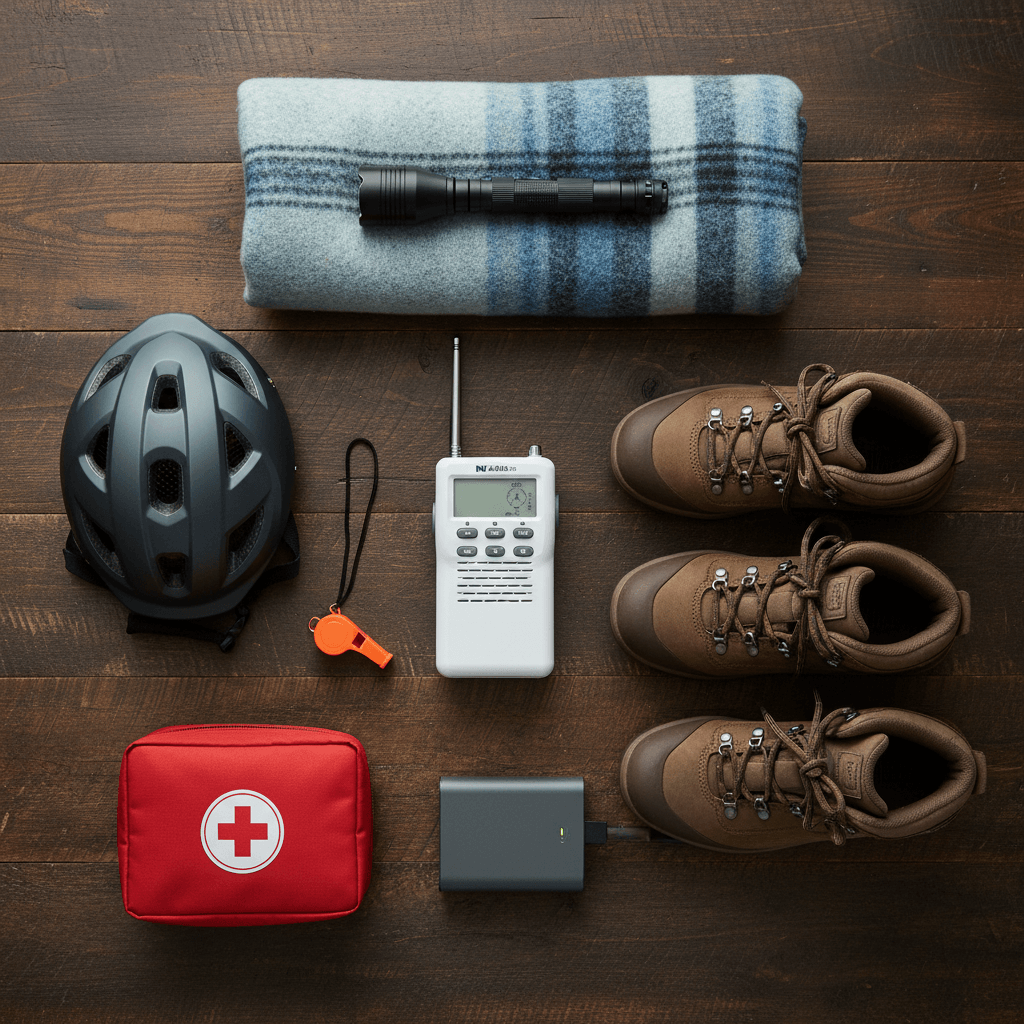
- Battery-powered or hand-crank NOAA Weather Radio, tuned to 162.550 MHz
- Flashlight and extra batteries, and a headlamp so your hands stay free
- First aid kit with any household-specific medications
- Whistle or loud signaling device
- N95 masks, useful for post-tornado debris, and already familiar from Ohio’s 2020 COVID declarations
- Wrench or pliers to shut off gas and water utilities
- Manual can opener
- Paper copies of local maps. GPS is unreliable when cell towers are damaged
- Portable phone charger (fully charged before storm season)
- Copies of insurance documents in a waterproof bag
- Cash in small bills. ATMs and card readers go offline when power is out
📦 Recommended: The Lost Superfoods
Ensure your family has a reliable, long-lasting food supply ready to go when supply chains are disrupted by severe storm activity in the Midwest.
When a Tornado Warning Is Issued for Hamilton County
A Tornado Watch means conditions favor development, stay alert and finish any outdoor tasks. A Tornado Warning means a tornado has been confirmed by radar or a spotter and is imminent. At that point, the window for decisions is closed. Everything below should already be decided.
- Move immediately to your safe room. Don’t stop to gather items or look outside. Shut interior doors between you and exterior walls.
- Protect your head and neck. Use a bicycle or sports helmet, heavy blankets, or couch cushions. Flying debris causes the majority of tornado injuries and fatalities.
- Stay off your phone except for weather updates. Monitor the NWS Wilmington feed at weather.gov/iln or your NOAA radio. Cell networks get congested during severe weather events.
- Mobile homes are not safe shelter. If you live in or are near a mobile home, identify the nearest permanent structure before tornado season. Leave before the warning is issued if you can.
- If caught in a vehicle: If the tornado is distant and you can safely drive perpendicular to its path, do so. If it’s imminent, park away from trees and overpasses, stay buckled, and get as low as possible below the window line with your arms protecting your head.
After the Storm: The Ohio Valley Has a Flood Phase Too
Ohio’s June 2019 federal declaration is a reminder that the tornado passing overhead is sometimes not the last hazard. Saturated soil, overwhelmed storm drains, and damaged retaining structures can produce dangerous conditions for hours or days afterward. Don’t assume it’s over once the wind stops.
- Check for injuries first. Don’t move anyone with a possible spinal injury unless they face immediate danger. Call 911 and follow dispatcher instructions.
- Do not enter standing water. Six inches of moving water can knock a person down. Flooded roads following a tornado event have contributed to post-storm fatalities in Ohio. Turn around, don’t drown.
- Check for gas leaks before re-entering your home. If you smell gas or hear hissing, leave the building, leave the door open, and call your utility provider from outside. Do not use a light switch or any electrical device.
- Stay clear of downed lines. Assume every downed power line is live. Report them to Duke Energy or your local utility immediately.
- Document damage before you touch anything. Photograph every room and exterior area before beginning cleanup. Your insurance claim depends on it. FEMA assistance applications, if a declaration covers your county, go through fema.gov.
📋 Print this checklist, keep it with your emergency supplies.
Frequently Asked Questions. Based on Ohio’s Actual Disaster Record
Ohio’s 2019 tornado declaration involved flooding too. Should I have a flood kit separate from my tornado kit?
Not necessarily separate, but your kit should account for both. Store it on an upper floor if possible so it isn’t compromised by basement flooding after a storm. Include waterproof bags for documents and electronics, and know your home’s flood risk using FEMA’s flood map at msc.fema.gov. Hamilton County has areas in or near the 100-year floodplain, particularly near Mill Creek and the Little Miami corridor.
The last Ohio tornado declaration was May 2024. Does that mean Cincinnati was directly affected?
Federal disaster declarations cover counties that FEMA formally designates after a governor’s request. The May 2, 2024 declaration (FEMA DR-4781-OH) involved multiple Ohio counties. Check the official declaration at fema.gov/disaster/4781 for the specific designated counties. Regardless of exact county coverage, declarations in Ohio’s southwestern region consistently include the Cincinnati metro area’s surrounding counties.
What’s the difference between signing up for Hamilton County EMA alerts and relying on the Wireless Emergency Alert that comes to my phone automatically?
Wireless Emergency Alerts (WEA) are geographically broadcast by cell carriers and arrive automatically for Tornado Warnings, you don’t sign up. Hamilton County EMA’s CodeRED system supplements that with more localized notifications, including watches, road closures, and post-event updates that WEA doesn’t cover. Use both. Neither requires anything beyond a smartphone and two minutes of registration for CodeRED.
Get real disaster prep, decoded from FEMA, NOAA & USGS.
One short email when something actually matters for your zip code. No spam, ever.