
Best Portable Power Stations for a 72-Hour Blackout (2026 Review)
Since January 2021, the United States has accumulated 351 federally declared disasters, an average of roughly one new declaration every four days. Severe storms alone account for 140 of those events; floods add another 78. See our Power Outage Preparedness guide for the fundamentals behind this buying guide. The week ending June 30, 2026 saw eight simultaneous declarations across Wisconsin, Michigan, Mississippi, Idaho, Guam, Louisiana, Missouri, and Nebraska. That is the grid-stress environment you are buying for. For a household running a refrigerator, lights, phones, and a CPAP, you need at least 1,000–1,500 Wh of usable capacity and 1,500 W of continuous output. Our top pick is the EcoFlow DELTA 2 for its 1,024 Wh LFP battery, X-Stream fast charging, and wide retail availability.
Quick picks
- Best overall: EcoFlow DELTA 2, Check current price on Amazon
- Best value: Jackery Explorer 1000 v2, Check current price on Amazon
- Best fast charging: Bluetti AC180, Check current price on Amazon
📊 Across the United States: Federally Declared Disasters (2021–2026)
351 major disaster declarations were issued in this period, according to FEMA records.
| Disaster type | Declarations |
|---|---|
| Severe Storm | 140 |
| Flood | 78 |
| Hurricane | 31 |
| Winter Storm | 22 |
| Fire | 20 |
| Tropical Storm | 17 |
| Severe Ice Storm | 9 |
| Tornado | 9 |
States with the most declarations
| State | Declarations |
|---|---|
| AK | 18 |
| TN | 16 |
| CA | 16 |
| KY | 14 |
| MT | 13 |
| MO | 12 |
| KS | 12 |
| NE | 11 |
Most recent declarations
| Date | Type | Event |
|---|---|---|
| 2026-06-30 | Flood | Severe Storms, Tornadoes, And Flooding (Wi) |
| 2026-06-30 | Flood | Severe Storms, Tornadoes, And Flooding (Mi) |
| 2026-06-30 | Severe Storm | Severe Storms, Straight-Line Winds, Tornadoes, And Flooding (Ms) |
| 2026-06-30 | Severe Storm | Severe Storms, Straight-Line Winds, Flooding, Landslides, And Mudslides (Id) |
| 2026-06-30 | Typhoon | Super Typhoon Sinlaku (Gu) |
| 2026-06-30 | Tropical Storm | Tropical Storm Arthur (La) |
Source: FEMA OpenFEMA Disaster Declarations · retrieved 2026-07-20 by US Risk Radar.
Severe storms and floods cause most U.S. blackouts, and they hit fast
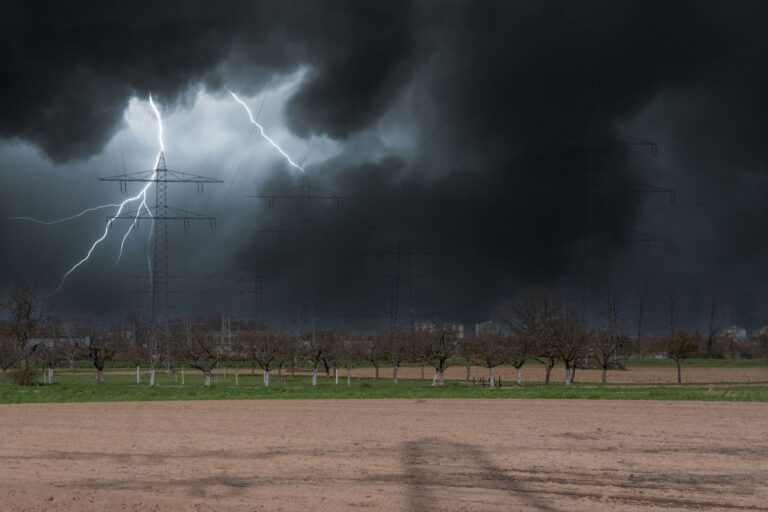
Of the 351 federal disaster declarations since 2021, severe storms and floods together account for 218 events, 62% of the total. That breakdown matters when you’re choosing backup power, because storm-driven outages behave differently from hurricane outages. A severe thunderstorm or derecho can knock out a transmission line in under an hour with little warning, while a hurricane gives you a 48-to-72-hour forecast window to charge every device you own before landfall.
FEMA’s power outage preparedness guidance recommends planning for at least three days without grid power. The U.S. Energy Information Administration puts average annual outage duration at 5.5 hours per customer in 2022, but that average is pulled down by minor blinks. The severe-event bucket (winter storms, hurricanes, major flood damage to substations) is what stretches outages past the 72-hour mark and into a week.
A portable power station is not a generator replacement. It is a triage tool for essential loads only: the refrigerator, a few LED lights, phone and router charging, a CPAP if someone in the house uses one. Heating and central air conditioning are out of scope. With that constraint in mind, here is the honest math:
- Refrigerator: ~1.5 kWh per day after duty-cycle accounting (compressor runs 30–40% of the time).
- 5× LED lights @ 10 W, 5 hours/day: 0.25 kWh.
- Phones, tablet, router: 0.2 kWh.
- CPAP (if applicable): 0.3 kWh per night.
That puts a realistic essentials-only baseline near 2.0–2.5 kWh per day. A single 1,000 Wh unit covers roughly half of one day at essentials-only. The strategies that actually bridge 72 hours are covered in the sizing section below.
Quick comparison: three units that cover the realistic range
| Feature | EcoFlow DELTA 2 | Jackery Explorer 1000 v2 | Bluetti AC180 |
|---|---|---|---|
| Capacity | 1,024 Wh | 1,070 Wh | 1,152 Wh |
| Continuous output | 1,800 W (2,700 W X-Boost) | 1,500 W (3,000 W surge) | 1,800 W (2,700 W surge) |
| Battery chemistry | LiFePO4 (LFP) | LiFePO4 (LFP) | LiFePO4 (LFP) |
| Cycle life to 80% | 3,000 cycles | 3,000 cycles | 3,500 cycles |
| AC recharge time | ~80 min (0–80%) | ~60 min (0–100%) | ~45 min (0–80%) |
| Solar input (max) | 500 W | 400 W | 500 W |
| Weight | 27 lb (12.2 kg) | 23.8 lb (10.8 kg) | 35 lb (15.9 kg) |
| Warranty | 5 years | 5 years | 5 years |
| Our score (avg) | 4.4 / 5 | 4.2 / 5 | 4.1 / 5 |
| Check price | Amazon | Amazon | Amazon |
EcoFlow DELTA 2. Best overall
The DELTA 2 earns the top slot because of one real-world advantage: its X-Boost mode pushes effective output to 2,700 W, which means it can start appliances, a small window AC unit, a chest freezer with a heavy compressor, that 1,500 W units cannot. In a storm aftermath, that headroom matters.
- Capacity: 4/5, 1,024 Wh LFP, covers essentials for roughly half a day solo.
- Reliability: 5/5. LFP chemistry, 3,000-cycle rating, 5-year warranty, no major recall history as of mid-2026.
- Price-per-Wh: 4/5, typically $0.85–$1.05/Wh at street prices.
- Portability: 4/5, 27 lb, integrated handles, manageable for one adult.
- Availability: 5/5. Amazon, Home Depot, Lowe’s, and direct from EcoFlow.
Buy it if: you want one unit to carry the household overnight and need fast recharge between outage windows. Pair with a 220 W solar panel for full 72-hour autonomy in most U.S. climates.
Skip it if: the lightest possible unit is your priority, the Jackery shaves off more than three pounds.
Check the EcoFlow DELTA 2 on Amazon →
Jackery Explorer 1000 v2. Best value
Jackery moved the Explorer 1000 line to LFP chemistry with the v2 update without moving the price to match competitors, which is why it wins the value category. At 23.8 lb it is also the easiest unit here to carry across a yard or load into a vehicle, which matters in the 31 hurricane declarations and 9 tornado declarations in the FEMA data above, where evacuation may be part of the scenario.
- Capacity: 4/5, 1,070 Wh, essentially equivalent to the DELTA 2.
- Reliability: 4/5, clean recall history, but third-party continuous-load data gives EcoFlow a slight edge.
- Price-per-Wh: 5/5, typically $0.70–$0.85/Wh, best of the three.
- Portability: 5/5, lightest of the group.
- Availability: 5/5. Amazon, Costco, Home Depot, and direct.
Buy it if: price-per-watt-hour matters most, or you may need to move the unit quickly during an evacuation.
Skip it if: you need X-Boost-style surge headroom for heavy appliance starts.
Check the Jackery Explorer 1000 v2 on Amazon →
Bluetti AC180. Best fast charging
Recharge speed is underrated in a multi-day outage. Urban grids in particular tend to restore in intermittent windows, power comes back for two hours, goes down again, comes back. Bluetti’s Turbo mode pulls 1,440 W from a wall outlet and hits 80% from empty in roughly 45 minutes. That is fast enough to capture a two-hour restoration window and send you into the next dark stretch with a nearly full battery.
- Capacity: 5/5, 1,152 Wh is the largest here, with a 3,500-cycle LFP rating.
- Reliability: 4/5, strong user reviews, but Bluetti’s U.S. service footprint is smaller than EcoFlow’s or Jackery’s.
- Price-per-Wh: 4/5, comparable to the DELTA 2.
- Portability: 3/5, 35 lb is heavy enough that two adults make the carry easier.
- Availability: 4/5. Amazon and direct; fewer big-box partners.
Buy it if: you are in an urban area with rolling outages or intermittent restoration, where capturing every on-window is the difference between comfort and spoiled food.
Skip it if: portability or deep U.S. retail support is the priority.
Check the Bluetti AC180 on Amazon →
How to size a unit for your actual house
Use this worksheet instead of the marketing wattage on the box:
| Essential load | Watts | Hours / day | Wh / day |
|---|---|---|---|
| Refrigerator (duty-cycle adjusted) | ~150 | 10 effective | 1,500 |
| 5× LED bulbs (10 W each) | 50 | 5 | 250 |
| Phones, tablet, router | ~25 | 8 | 200 |
| CPAP (optional) | ~45 | 7 | 315 |
| Microwave (3 min, 2× per day) | 1,000 | 0.1 | 100 |
| Total essentials baseline | ~2,365 Wh / day |
For a true 72-hour solo run, you would need ~7,000 Wh of usable capacity from a single unit. None of these units hit that. The configurations that actually work:
- One 1,000 Wh unit + 400 W solar panel: generates 1.5–2.0 kWh of solar per sunny day, adequate for essentials in Florida, Texas, California, or Arizona where sun is reliable post-storm.
- Two 1,000 Wh units, rotated: one runs essentials while the other recharges during grid restoration windows.
- One 1,000 Wh unit, triage mode: run the refrigerator 12 of every 24 hours rather than continuously. Per USDA food safety guidance, a full, unopened refrigerator stays safe for about four hours without power, strategic cycling stretches that budget across 72 hours without spoilage.
Frequently asked questions
Severe storms caused 140 federal disaster declarations since 2021, do those outages typically last the full 72 hours?
Not always, but the unpredictability is the problem. A localized severe storm may restore power in 6–12 hours; the same storm type that damages transmission infrastructure in a rural area can extend to 4–7 days. FEMA’s 72-hour planning standard exists precisely because you cannot know which outcome you are in until you are in it. A charged power station on day one costs nothing to have; buying one on day two of a blackout is not possible.
With flooding responsible for 78 federal declarations since 2021, should flood-prone households choose a different unit?
The unit choice is less important than storage location and evacuation readiness. All three units reviewed here are not waterproof, store them above potential flood level and treat them as grab-and-go items. For households in flood-declared counties (check your status at FEMA’s flood map service), the Jackery’s lighter weight is a genuine advantage if evacuation is part of your plan.
Winter storms account for 22 declarations and ice storms another 9, does cold weather affect battery performance?
Yes, meaningfully. LFP batteries lose roughly 20–30% of usable capacity at temperatures below 32°F and should not be charged below that threshold. In a winter storm scenario where your home drops to near-freezing, store the unit in the warmest interior room available, wrap it in a blanket if needed, and pre-warm it before heavy use. The EcoFlow DELTA 2 has a built-in low-temperature protection circuit that prevents charging damage; verify the spec sheet on whichever unit you choose for the same feature before a winter event.
What we’d buy for different U.S. risk profiles
For a Gulf Coast or Atlantic household in the 31-hurricane-declaration belt: the EcoFlow DELTA 2 plus a 220 W solar panel. Pre-charge before the storm, use solar to extend indefinitely once the weather clears, fast-recharge during any grid restoration window.
For a Midwest household in tornado and severe-storm territory (Missouri, Kansas, and Nebraska alone account for 35 declarations since 2021): the Jackery Explorer 1000 v2, two of them. Rotate through the 72-hour window and keep both light enough to move fast if shelter relocation is required.
For an urban household anywhere in the country facing rolling outages: the Bluetti AC180, because capturing every two-hour restoration window is the strategy, and no unit in this class charges faster.
Beyond the power station
- Our full 72-hour power outage kit checklist, everything else that belongs in the same closet.
- Florida hurricane preparedness guide, geographic context for our top recommendation.
- New Orleans hurricane evacuation plan, relevant when grid loss pairs with evacuation risk.
Sources
- FEMA disaster declaration records, 2021–2026 (national scope).
- U.S. Energy Information Administration, “U.S. electricity customers experienced 5.5 hours of power interruptions in 2022.”
- FEMA Ready.gov, Power Outages preparedness guidance.
- USDA FoodSafety.gov, Food safety during power outages.
- FEMA Flood Map Service Center, fema.gov/flood-maps.
- EcoFlow DELTA 2, Jackery Explorer 1000 v2, and Bluetti AC180 official spec sheets.
This article is informational. We are not licensed electricians or emergency-management professionals. Installation guidance for transfer switches and home backup integration requires a qualified electrician. For situation-specific emergency advice, follow guidance from FEMA, your state emergency management agency, and local first responders. In an emergency, call 911.
📊 See how this compares nationally in our US Disaster Risk Index 2026, ranking all 50 states by FEMA disaster declarations.