
When emergency teams in Newport simulate a disaster response, they are not just practicing radio calls and vehicle staging. They are stress-testing the same systems that families depend on during a real outage: power, communication, first aid, lighting, and a clear plan for the first 72 hours. That is the useful takeaway for homeowners. You do not need a command post to be ready, but you do need the right essentials organized before the lights go out. Our Power Outage Preparedness guide covers how to organize those essentials.
In preparedness work, the first three days matter most. FEMA commonly frames emergency readiness around a 72-hour window because local resources can be delayed, roads can be blocked, and cell service may be limited. That means every household should be able to handle power loss, water interruptions, minor injuries, and a need to shelter in place without immediate outside help. The Newport drill is a reminder that professional responders train for these realities year-round, and homeowners should borrow that same disciplined approach.
What emergency teams are really practicing
Disaster drills are not about dramatic scenarios; they are about repeatable habits. Teams rehearse how to communicate, where to stage equipment, how to triage issues, and how to work when normal systems are disrupted. For a homeowner, that translates into a simple truth: readiness is less about buying a lot of gear and more about having the right gear that is easy to find and easy to use.
Think of a response team’s checklist in household terms:
- Power: Can you keep phones charged, run a light, or power a medical device?
- Communication: Can your family reach one another if cell towers are overloaded?
- Medical: Can you treat a cut, burn, sprain, or fever at home?
- Information: Can you get weather and emergency updates if the internet is down?
- Comfort and shelter: Can you stay safe and reasonably comfortable for three days?
USGS and NOAA alerts help you understand the hazard, but your kit determines whether you can respond calmly. That is why professional responders train with redundancy: a backup radio, backup batteries, backup lighting, and backup plans. Your home should follow the same logic.
Five pieces of gear professionals always prioritize
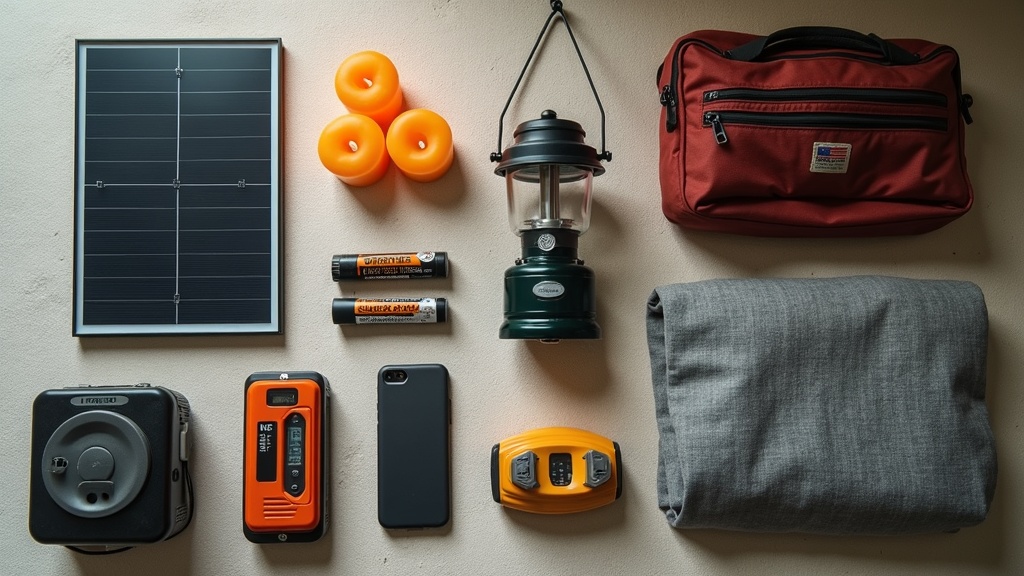
After reviewing how emergency teams operate during drills, five categories stand out as non-negotiable for households. These are not luxury items. They are the items that make a 72-hour plan workable.
1) Portable power
A charged portable power station can keep phones, rechargeable lanterns, a small fan, or a router running during short outages. It is especially valuable if you rely on medical equipment, need to preserve food in a controlled way, or want to avoid burning through single-use batteries. For longer outages, capacity matters more than hype: know what you will power, for how long, and how often you can recharge the unit.
2) Reliable lighting
Emergency teams do not rely on one flashlight. They carry multiple light sources because failures happen. At home, that means one flashlight per adult, a lantern for shared rooms, and fresh batteries or rechargeable backup packs. Keep one light in the bedroom so you can move safely at night without fumbling for a phone.
3) Communication devices
When the grid is unstable, cell networks may be congested or intermittently unavailable. A battery-powered NOAA weather radio, a two-way radio for family coordination, or a fully charged power bank gives you options. NOAA Weather Radio is especially useful because it can provide continuous alerts without needing internet access.
4) First-aid supplies
Responders always prepare to handle the first injury before it becomes a bigger problem. Your home kit should include bandages, gauze, antiseptic wipes, medical tape, gloves, tweezers, a digital thermometer, and any prescription medications your household depends on. A kit is only useful if everyone knows where it is and when items expire.
5) Water and simple food
Even a short outage can complicate meals and hydration. Keep at least one gallon of water per person per day, plus easy-to-open shelf-stable foods. Emergency teams plan for delays; homeowners should do the same. If you can make a meal without a stove, you will be far more comfortable during a power interruption.
📦 Recommended: Blackout Protocol
If the Newport drill reminds you that outages can become multi-day disruptions, a structured home power plan helps you decide what to run, what to conserve, and how to stay functional without guessing.
How to turn a drill into a household plan
The best emergency plans are simple enough to use under stress. Start by assigning each person a role for the first 72 hours. One adult checks hazards, one gathers supplies, one communicates with family or neighbors, and older children can help with lighting, water, or pet care. Written roles reduce confusion when you are tired or distracted.
Next, build a three-layer plan:
- Layer 1: Immediate needs. Flashlights, phone chargers, medication, water, and first aid.
- Layer 2: Comfort and continuity. Power bank, NOAA radio, snacks, hygiene items, and blankets.
- Layer 3: Information and recovery. Copies of insurance information, emergency contacts, spare cash, and a plan for food spoilage or cleanup.
If your home has children, seniors, or anyone with a health condition, adjust the plan around their needs first. If you depend on powered medical equipment, speak with your provider in advance about outage procedures and backup options. That is the same principle emergency teams use in the field: identify the critical need first, then layer on convenience.
Also consider where you will gather. Pick one room as your outage base with blankets, lights, chargers, and a battery radio. A central location prevents gear from being scattered across the house when stress is high.
Decode the weather and hazard data before the storm arrives
Public alerts can seem technical, but they are designed to help you make decisions. NOAA alerts tell you what is happening in the atmosphere or forecast, while USGS often provides earthquake and volcanic monitoring information. FEMA guidance helps you translate those warnings into action. For a homeowner, the key question is not only, “What is the hazard?” but, “What do I need to do in the next hour?”
Here is a practical way to read alerts:
- Watch: Conditions are possible. Review your supplies and charge devices.
- Warning: Conditions are happening or imminent. Finish preparations and shelter as directed.
- Advisory: A lesser hazard may still disrupt travel or power. Stay aware and avoid unnecessary risk.
Do not wait for a perfect forecast. Emergency drills exist because real conditions change quickly. If your area is prone to wind, wildfire smoke, flooding, winter ice, or earthquakes, use the forecast to prepare earlier rather than later.
📦 Recommended: The Grid Phantom
If your biggest concern is keeping critical electronics usable during grid failure, this is the kind of planning tool that helps you think through protection, backup, and continuity before an outage starts.
What to do next
- Inventory your 72-hour kit today. Check batteries, water, medications, and first-aid supplies.
- Charge and test your backup power. Make sure everyone knows how to use it.
- Program key alerts. Add NOAA weather alerts and local emergency notifications to your phone.
- Pick a family meeting point and backup contact. Write it down and post it where everyone can see it.
- Practice one outage scenario. Spend an evening using only your emergency lighting and backup charging plan.
Get real disaster prep, decoded from FEMA, NOAA & USGS.
One short email when something actually matters for your zip code. No spam, ever.